Stone Stairs, Sills & Thresholds
For numbered stone stair sets, window sills and thresholds.
- Materials
- Granite, marble and other suitable natural stone with compatible edge tooling.
- Process
- Size straight blanks, finish exposed edges and trial specified anti-slip grooves.

Recommended setup
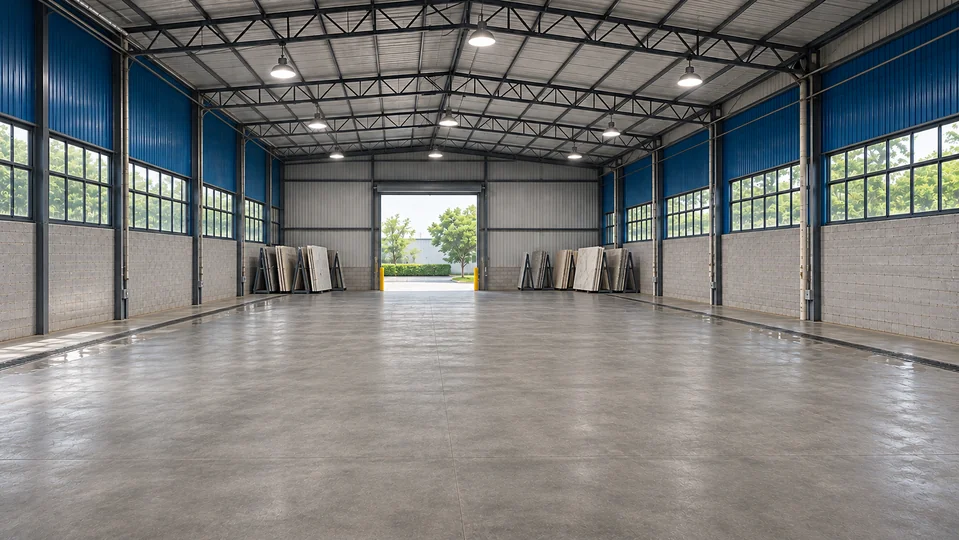
Setup 01 matches the workshop image above. Compare other setups for different parts or processes.
Setup 01
Single-blade bridge saw + double-swing edge polisher
Size straight treads and sills, then finish their exposed profiles. Qualify compatible anti-slip grooves on the double-swing polisher.
Workflow
- Size and number the blanks
- Finish exposed edges and trial specified anti-slip grooves
- Check the stair or sill set in order
-
Three-Axis CNC Bridge Saw
Size stone treads, risers, sills and thresholds.
- Output
- Numbered straight blanks for edge finishing.
- Overall size
- 4800 × 3050 × 2400 mm
-
5+12 BPM Double-Swing Edge Polisher
Form and polish compatible straight profiles and machine specified straight anti-slip grooves.
- Output
- Finished straight profiles and eligible grooves.
- Overall size
- 6700 × 2000 × 1850 mm
Compare other setups
Setup 02
5+2 bridge saw + five-axis waterjet
For repeated non-straight shapes or angled through cuts. Plan the exposed-edge finish separately.
Workflow
- Size and mark blanks
- Cut contours or angled details
- Inspect the cut face before finishing
-
5+2 Axis CNC Bridge Saw
Size blanks, cut mitres and use the milling head where the tool can reach.
- Output
- Sized blanks with specified cuts.
- Overall size
- 5200 × 3850 × 3800 mm
-
Five-Axis Waterjet
Cut contours and angled faces on supported workpieces.
- Output
- Shaped parts with the specified through-cut face.
Finished parts in use
Compare nosings, installed sills and doorway thresholds. Check profiles and groove positions before packing matched sets. Applications are shown for illustration.
Stair treads, landings and thresholds
-

Exposed tread nose Check the profile, finish and edges of each visible return. -

Installed stone stair flight Lay out and number each tread and riser before packing to keep the nosing line consistent. -

Stone landing panels Dry-lay the landing and first tread together to check how the edges, joints and finish meet. -

Fitted doorway threshold Check the finished height, projection and fit against both adjoining floors.
Window sills and grooved details
-

Finished sill edge Inspect the visible end face and edge profile before packing. -

Installed window sill Check projection, end clearance and, where specified, the underside drip detail. -

Exterior stone sill Check the finished projection and outward fall against the window detail. Verify any specified underside drip separately. -
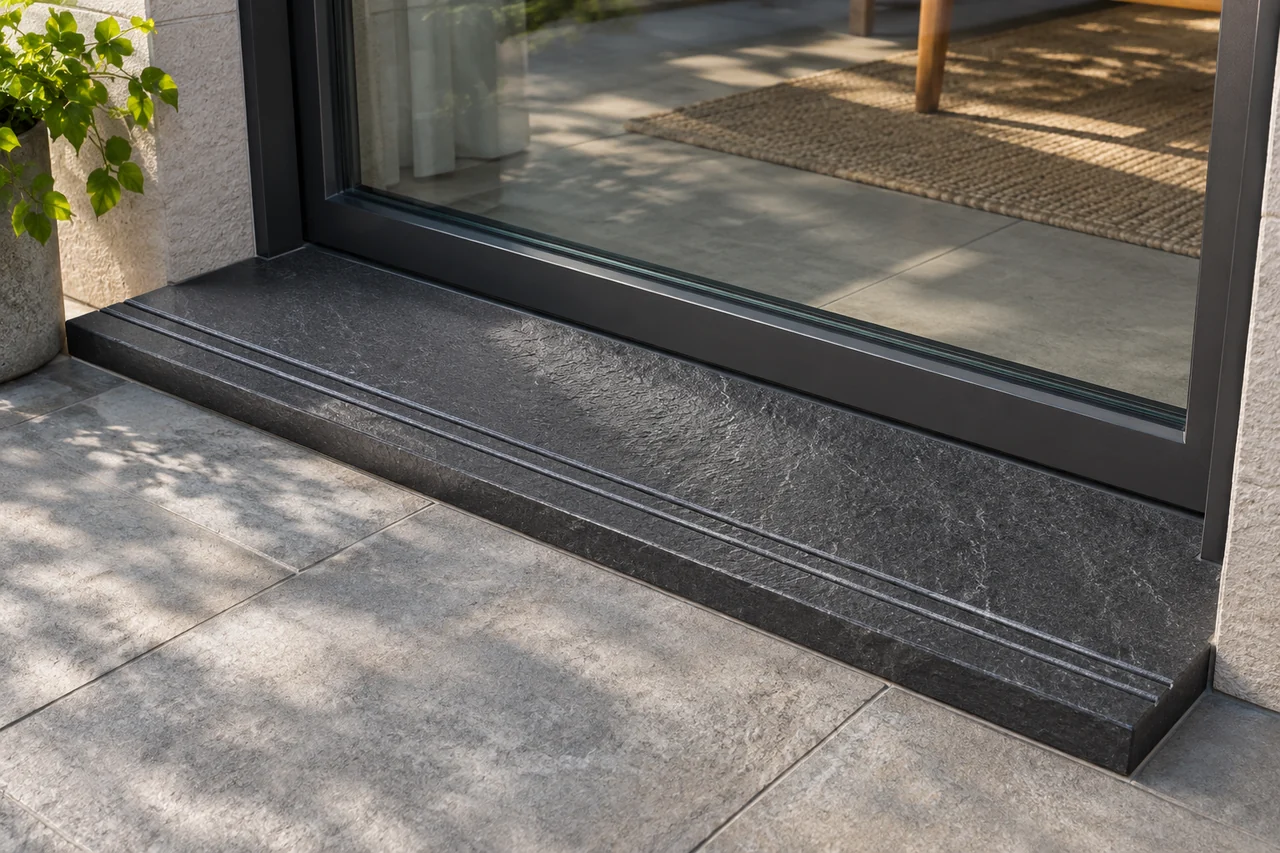
Grooved threshold detail Check the groove position, depth and visible edge on a full-size sample.
Check the fit for your workshop
Check your drawings against machine limits, then plan how slabs and finished parts will move through the workshop.
Part requirements
Mark the finished face, opening or stair number, and exposed returns. Call out groove geometry and orientation separately, especially for underside drip grooves.
Part sequence
Label each tread, riser or sill with its opening or stair position.
Groove orientation
Mark the face, reference edge, depth and ends for each slip or drip groove.
Visible returns
Call out all exposed side and front edges to keep the profile continuous.
Single-machine operations and model details
 Machine details
Three-Axis CNC Bridge Saw
- Functions
- Size stone treads, risers, sills and thresholds.
- Core configuration
- Three-axis CNC movement and a single saw blade. Check working dimensions and blade selection against the job.
 Machine details
5+12 BPM Double-Swing Edge Polisher
- Functions
- Form and polish compatible straight profiles and machine specified straight anti-slip grooves.
- Core configuration
- 5+12-head double-swing model for 90–2600 mm part width and 6–50 mm thickness. The catalogue shows a 3–4 groove configuration.
 Machine details
5+2 Axis CNC Bridge Saw
- Functions
- Size blanks, cut mitres and use the milling head where the tool can reach.
- Core configuration
- 5.5 kW independent milling head, CAD import, positioning camera and suction cups for slab handling.
 Machine details
Five-Axis Waterjet
- Functions
- Cut contours and angled faces on supported workpieces.
- Core configuration
- Five-axis cutting head. Verify the required cut angle, thickness and top and bottom geometry on a sample.
Workshop layout and handling
The estimate adds the footprints of the machines in Setup 01. Allow extra room for loading, aisles, servicing and auxiliary equipment. Confirm the installed layout for your site.
- Project racks
- Keep complete stair flights and opening sets on dedicated racks.
- Turning and support
- Reserve space to turn sills for underside grooves without losing the marked datum.
- Dry layout
- Allow room to lay out long sills or a complete stair set before protected packing.
Technical answers
Before you order
Review machine fit and sample checks, then see what to send for an equipment quote.
Discuss your setupWhich dimensions govern machine fit?
Check the largest blank at the saw and the width and thickness at the polisher. Provide the longest exposed edge and the exact tread or sill profile.
Can I add anti-slip and drip grooves?
Trial compatible straight anti-slip grooves on the 5+12 BPM. Specify underside drip grooves separately and verify tool access on an actual sill.
What should I record from the trial?
Check a tread and a sill or threshold from the actual order. Record the exposed profile, groove position where specified and fit against the adjoining part. See the finished-part checks.
What do you need for a quote?
Send the stair and sill schedules, material, blank dimensions, exposed edge profiles, groove drawings and quantities by size.
