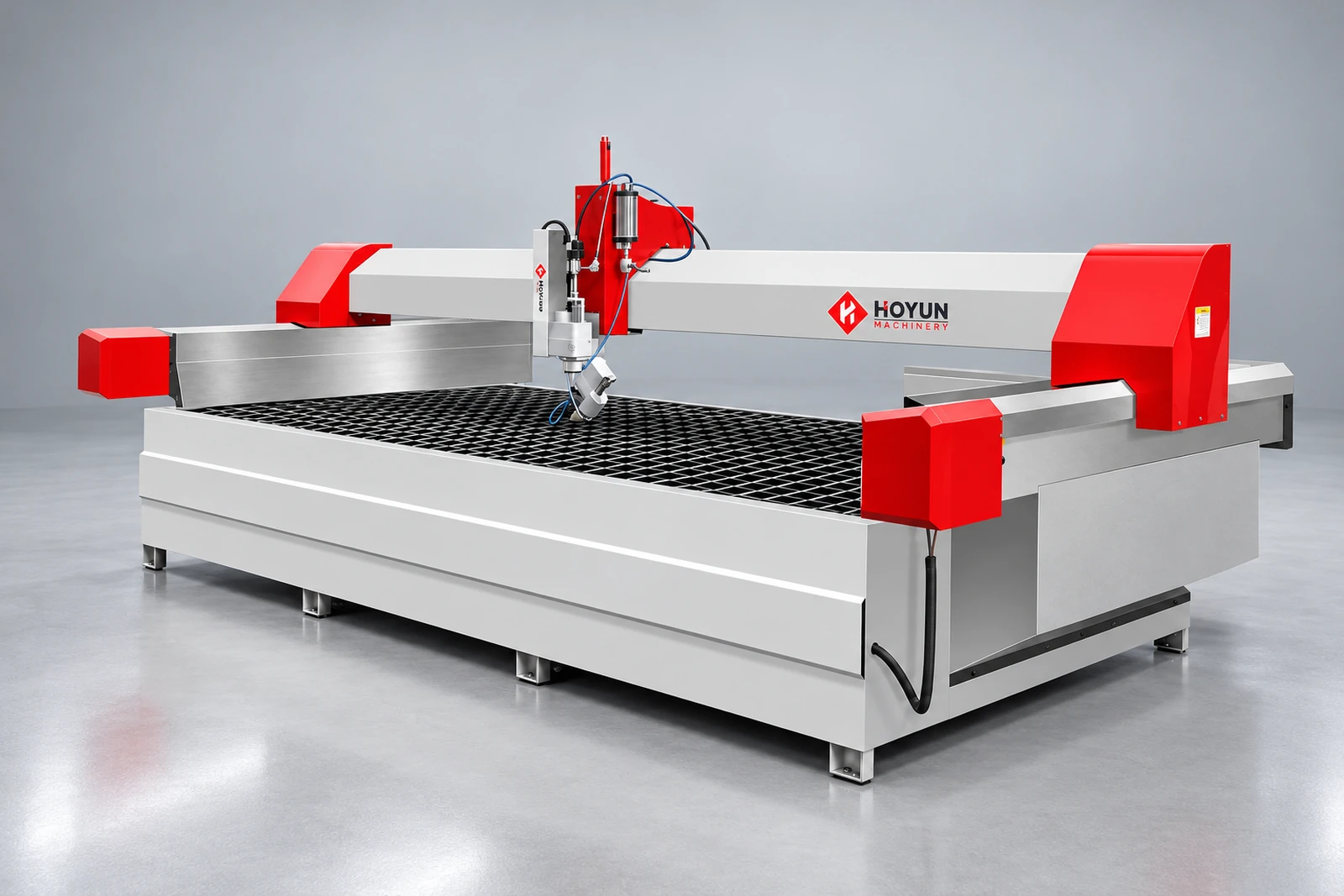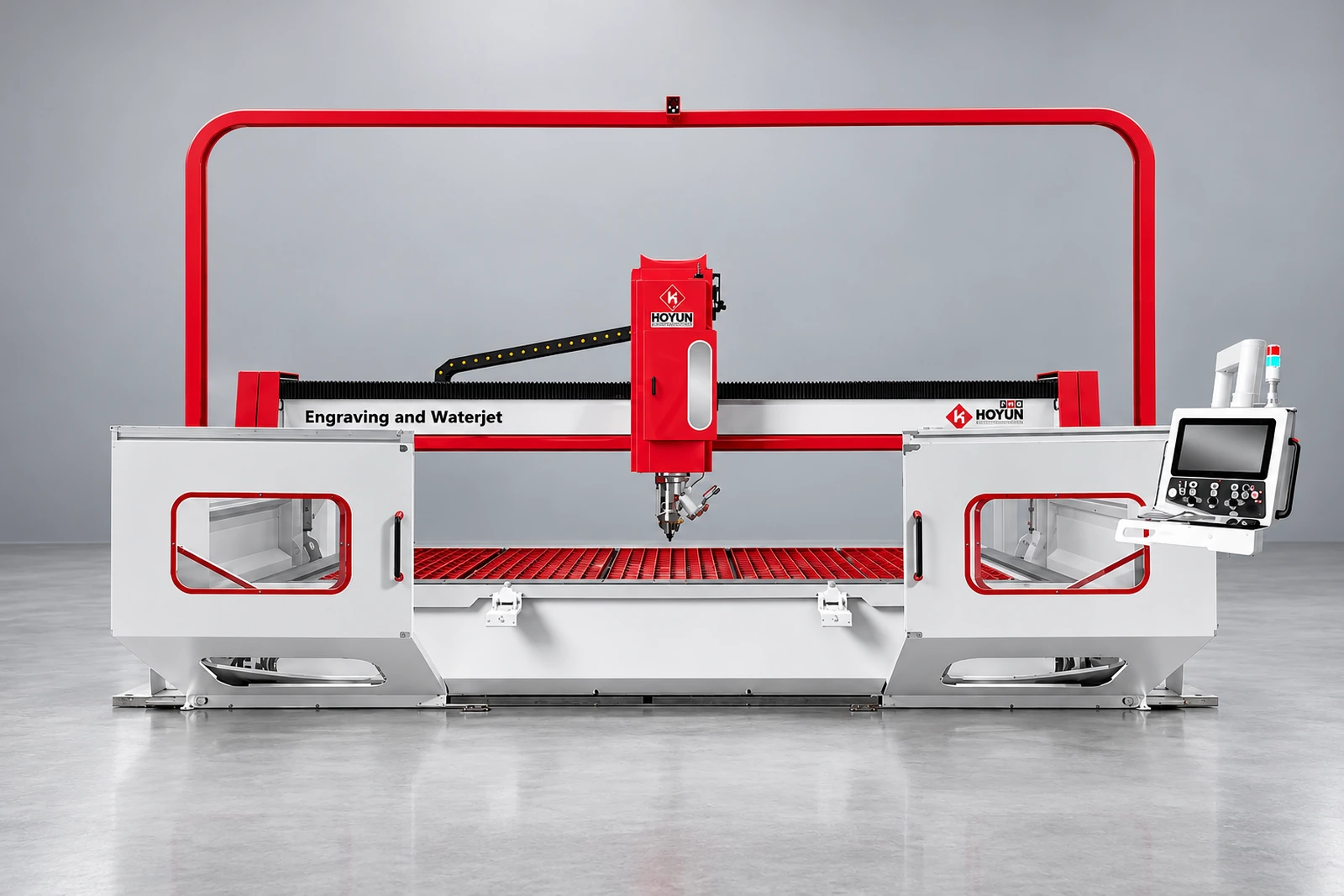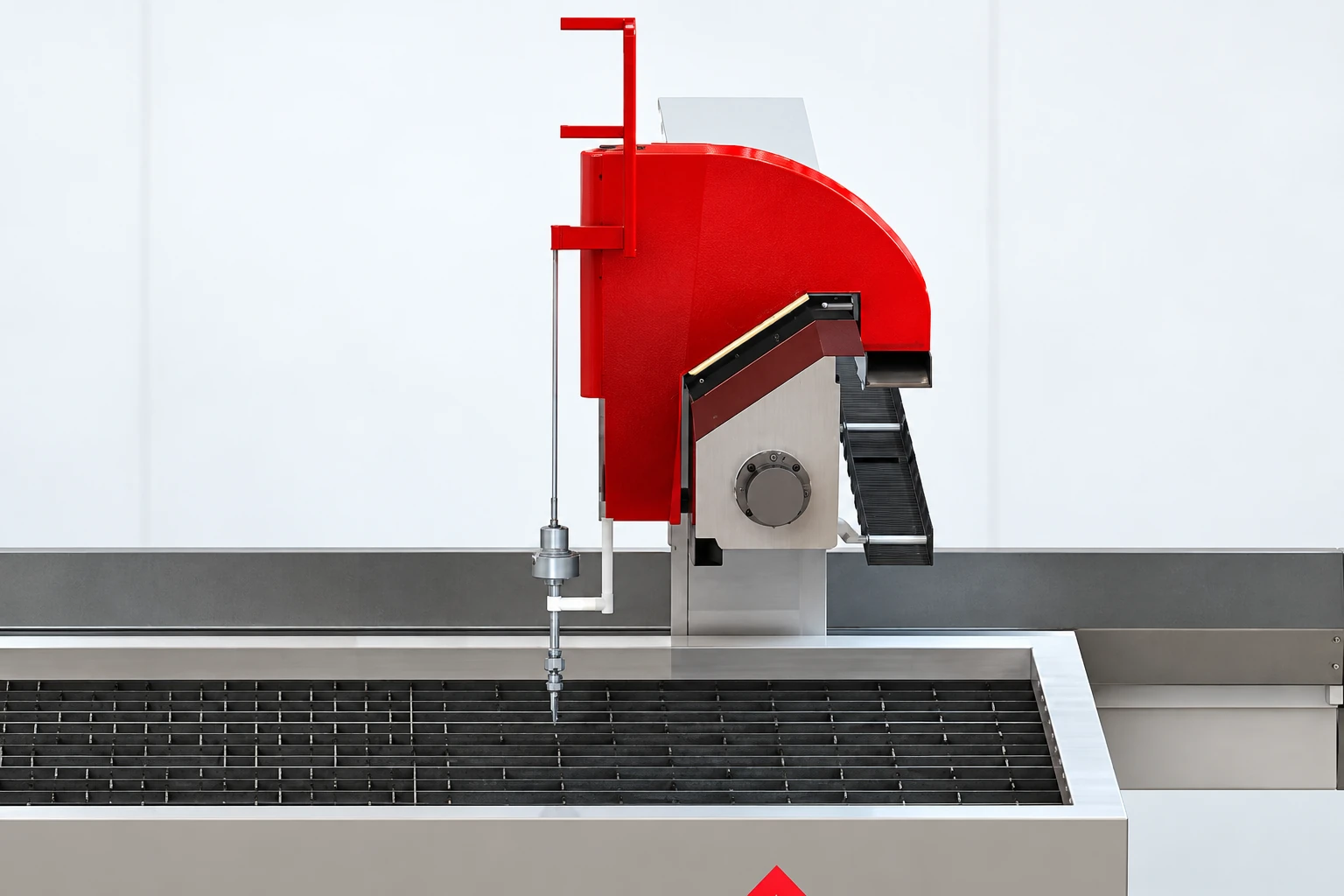
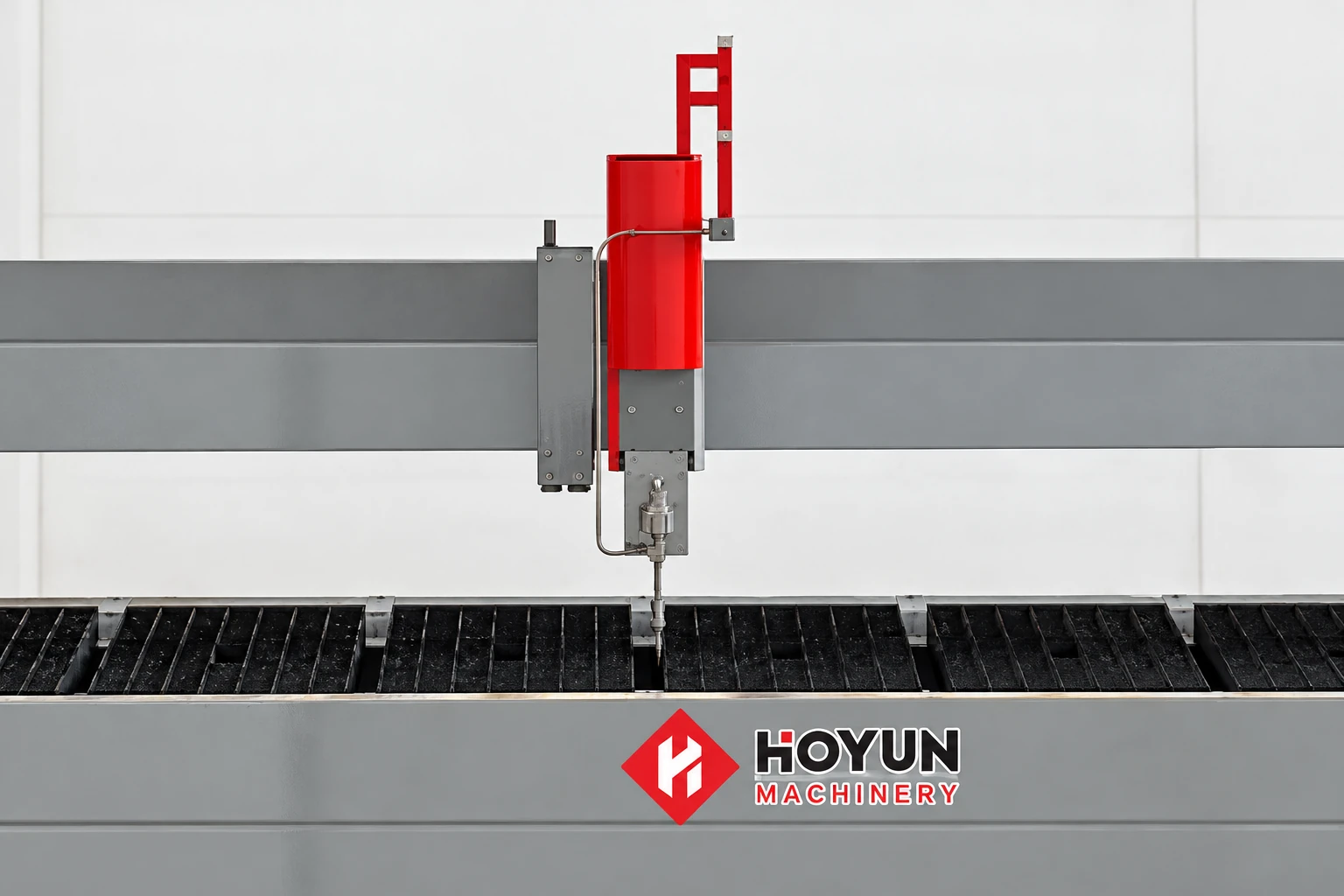
AB cutting head
Controlled head-angle movement supports shaped cutting and compensation for fitted stone and ceramic parts.
AB five-axis waterjet cutting for fitted stone and ceramic shapes, with controlled head-angle compensation for curved profiles and inlays.
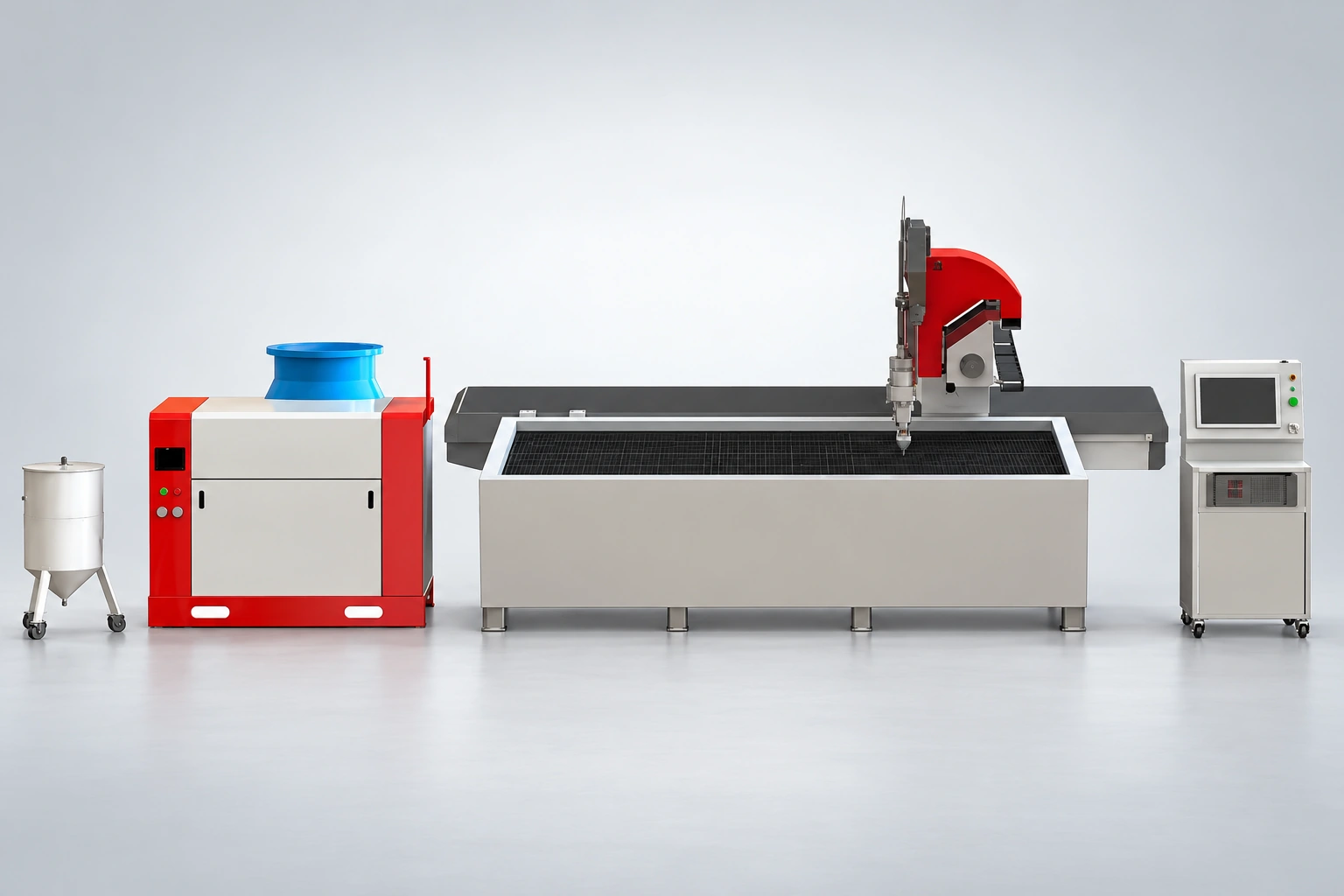
Choose the AB-head configuration for the required profile. Confirm its working angle and cutting setup for your parts.
01 / Overview
Use AB head movement to control the cut through curved paths and fitted pieces. This configuration focuses on stone and ceramic profiles where edge fit and assembly matter.
Controlled head-angle movement supports shaped cutting and compensation for fitted stone and ceramic parts.
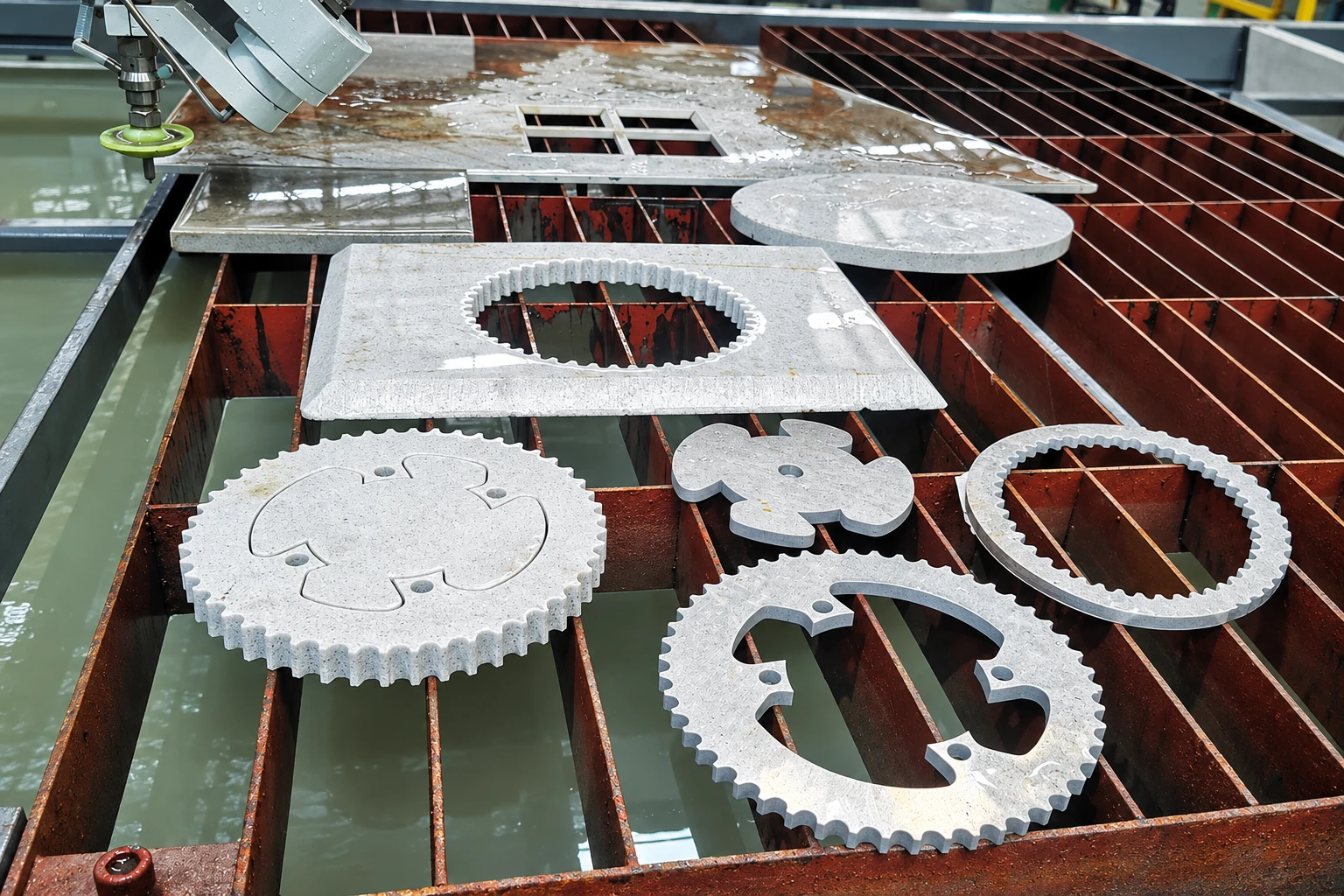
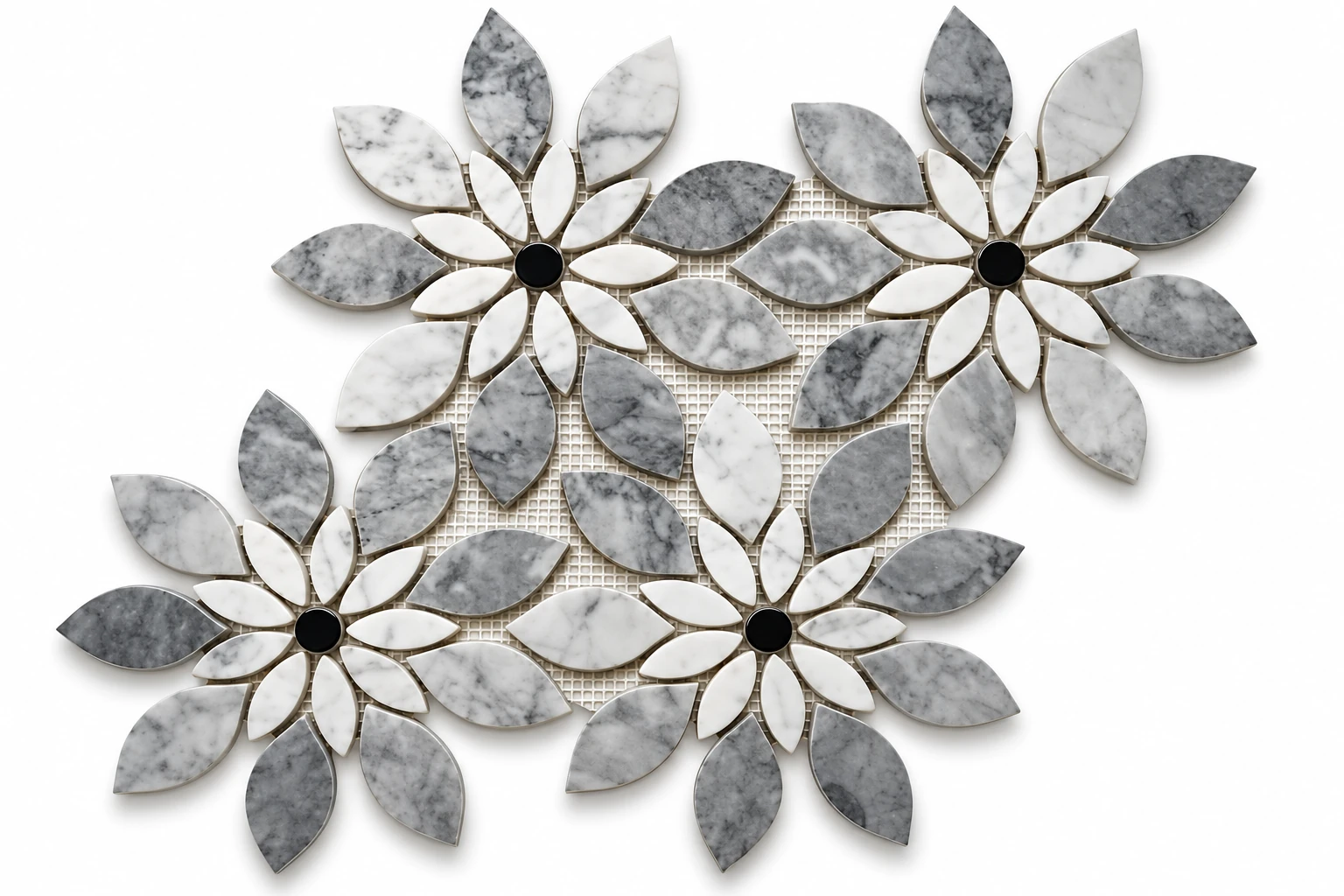
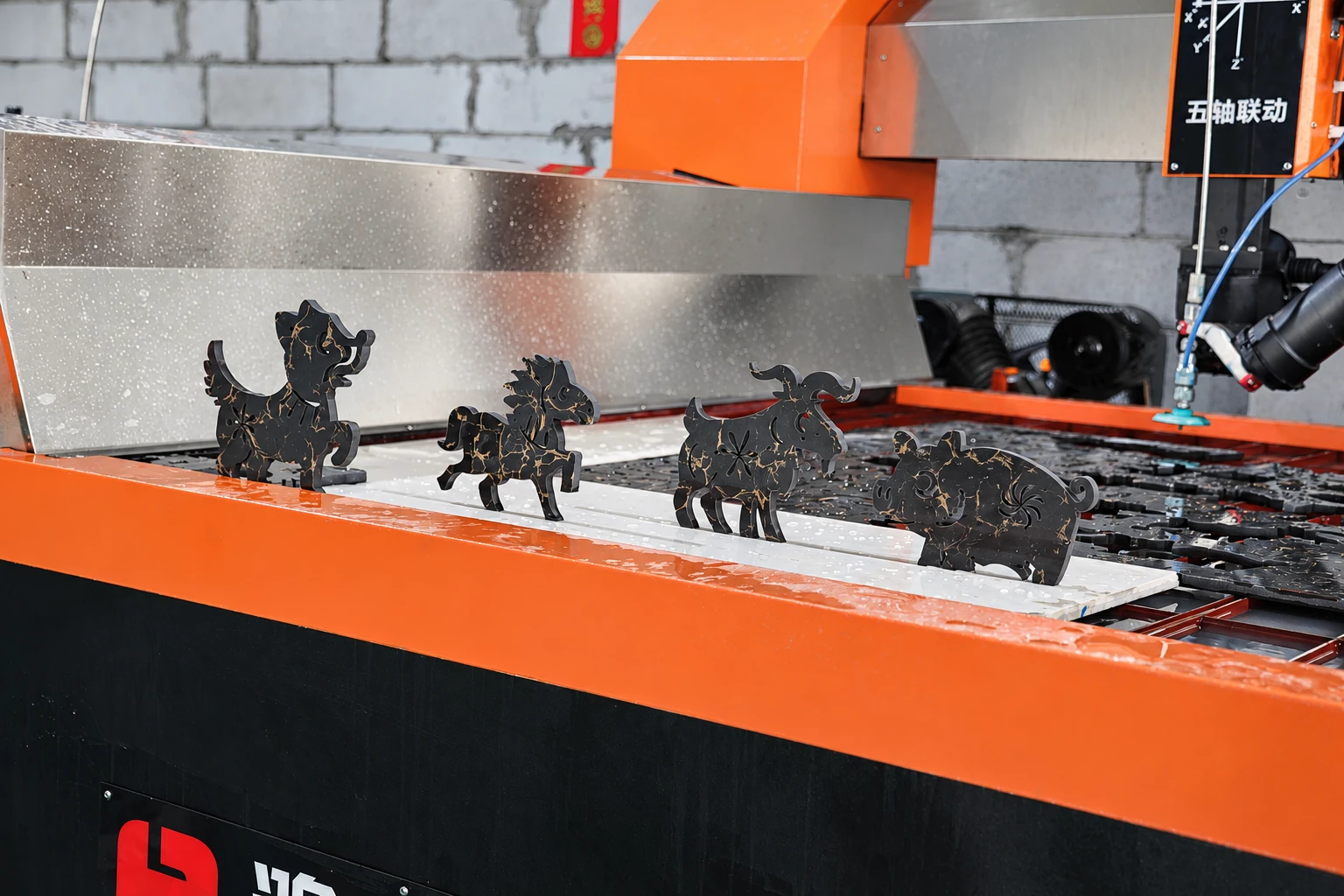
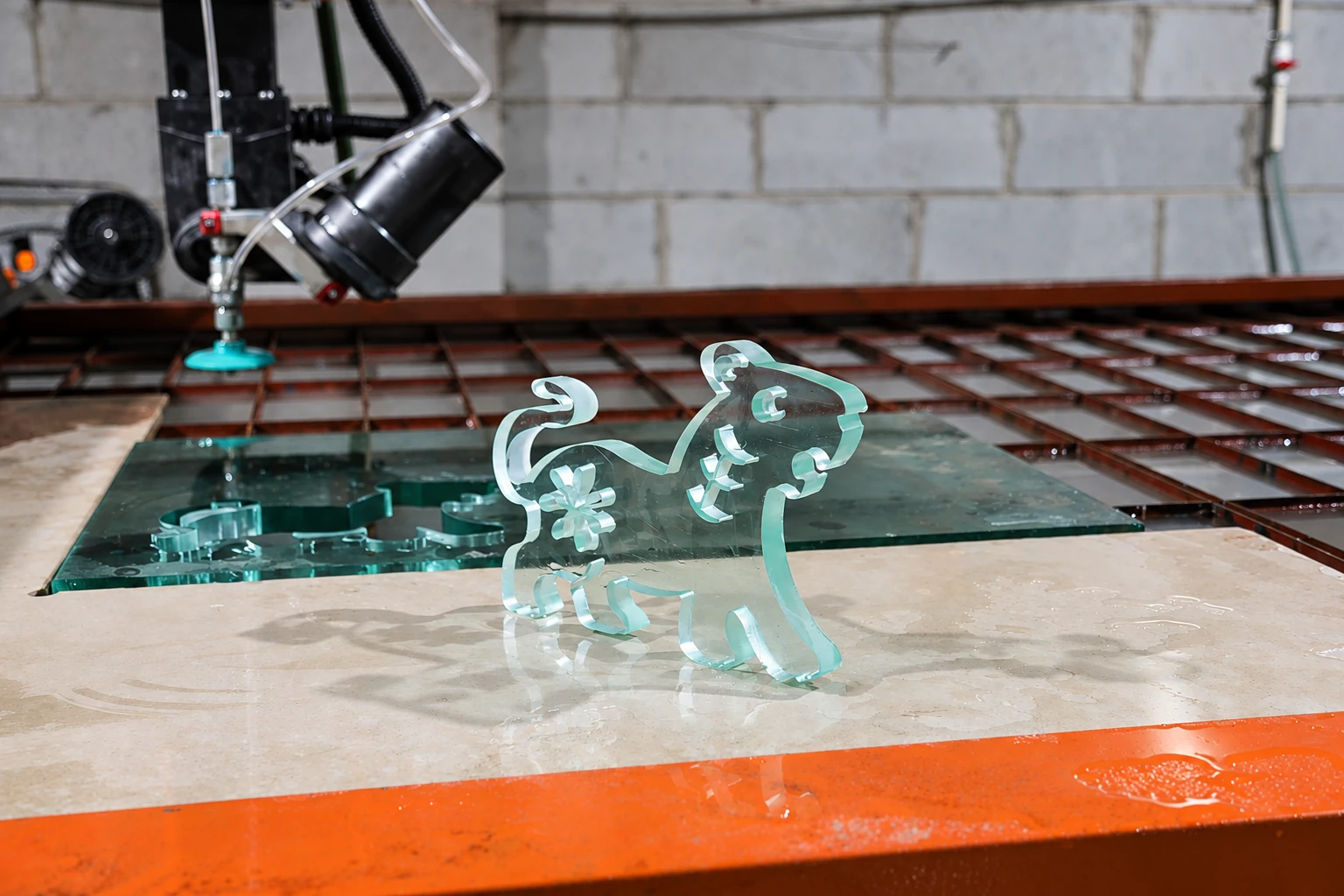
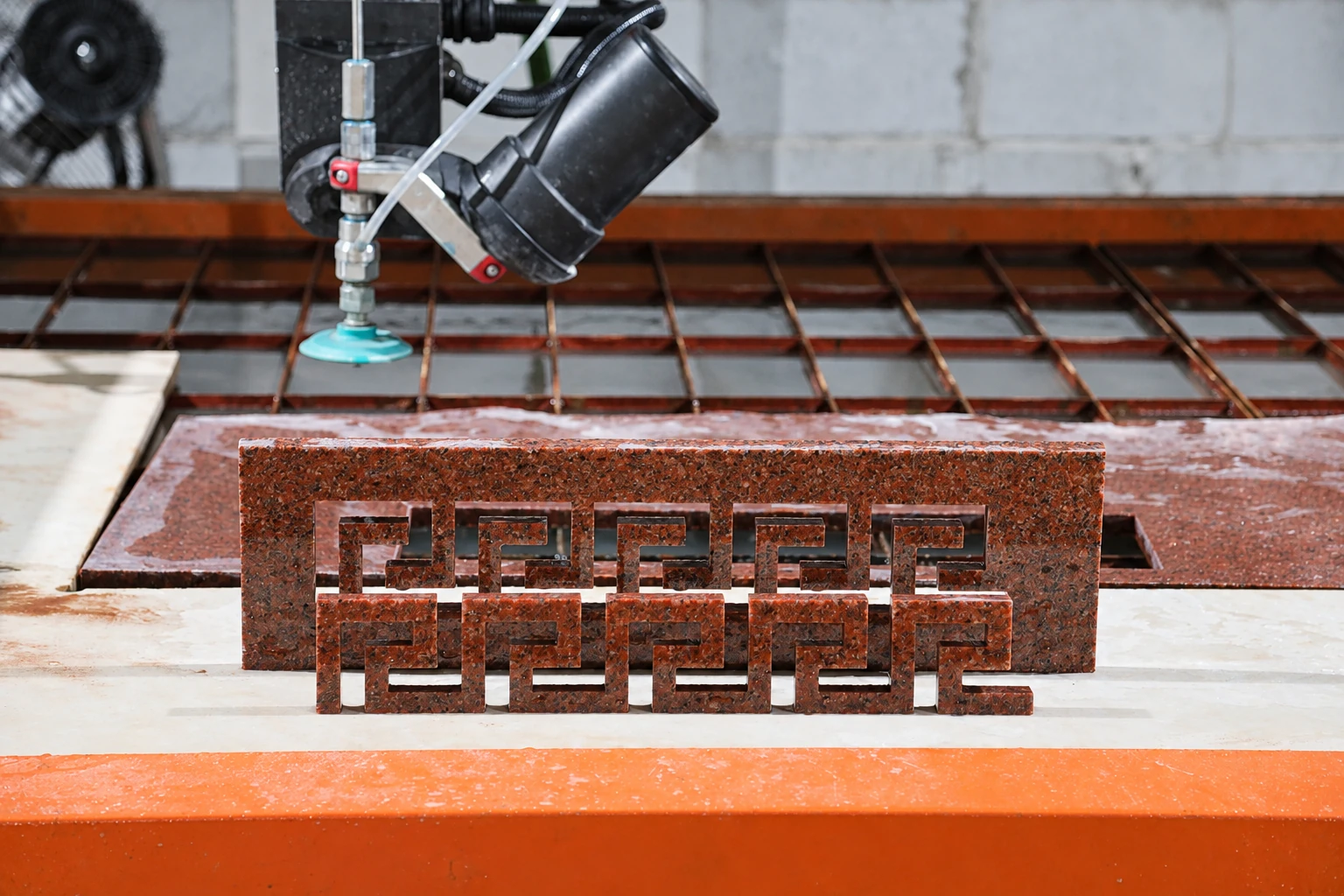
Prepare curves, internal openings and decorative pieces from the required drawing.
02 / Processing & applications
Cut the individual outlines and openings first, then assemble the finished pieces into stonework, surface panels and decorative inlays.

03 / Machine structure
The AB assembly adjusts head orientation along the programmed profile. Confirm the required cutting angle for the selected configuration.
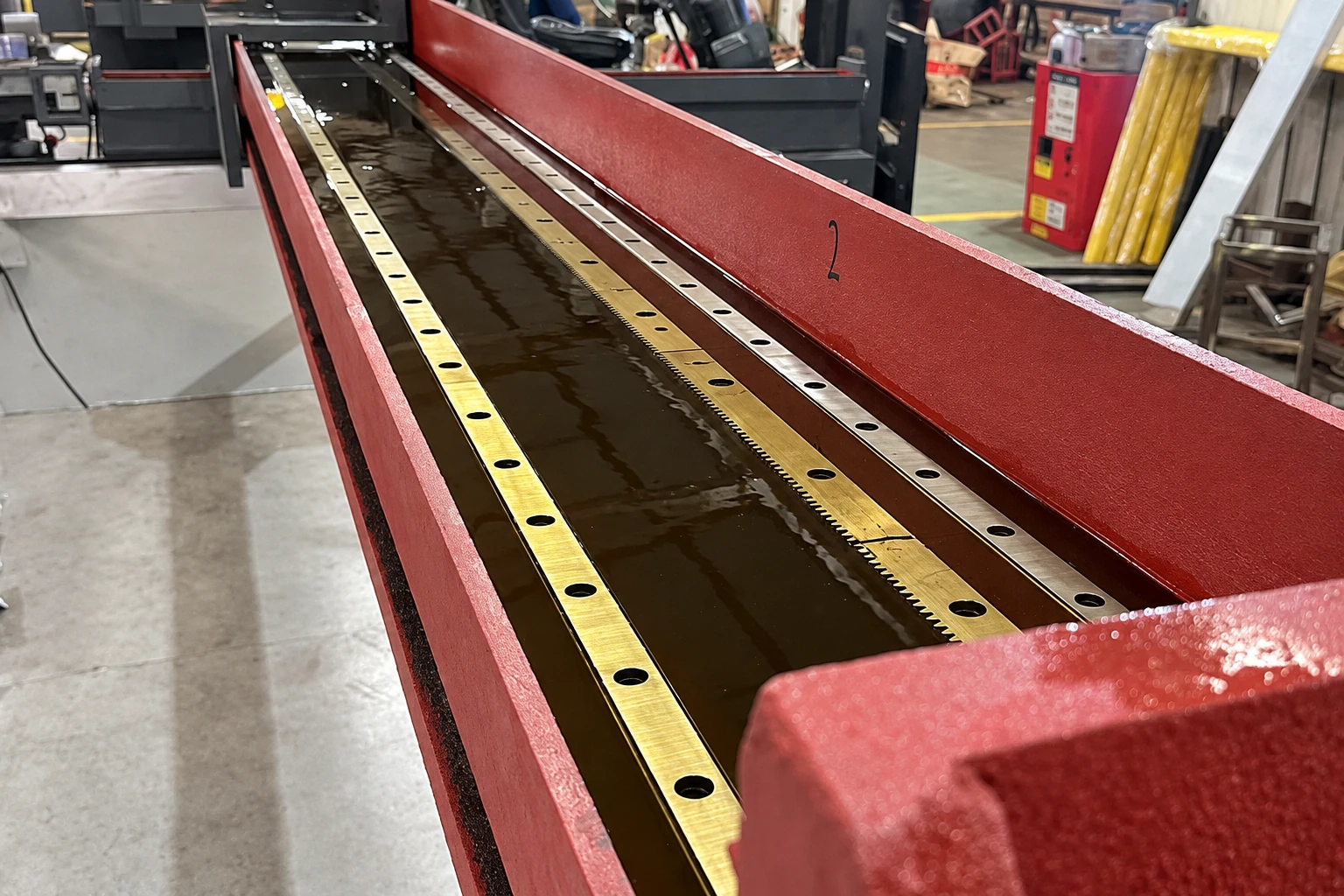
The bridge and beam arrangement supports travel of the cutting assembly across the working area.
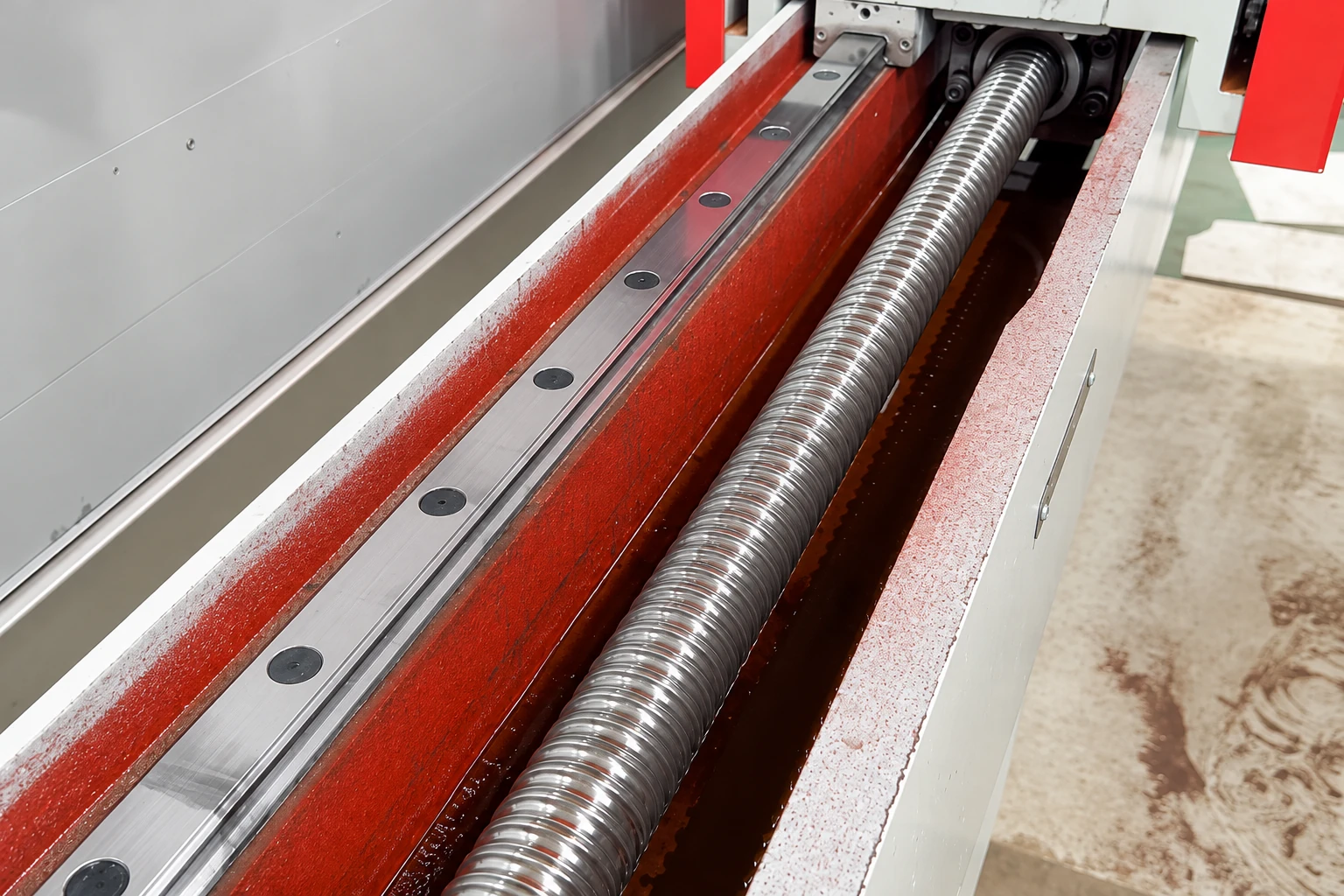
Oil-immersed guides support the moving assembly in the wet cutting environment.
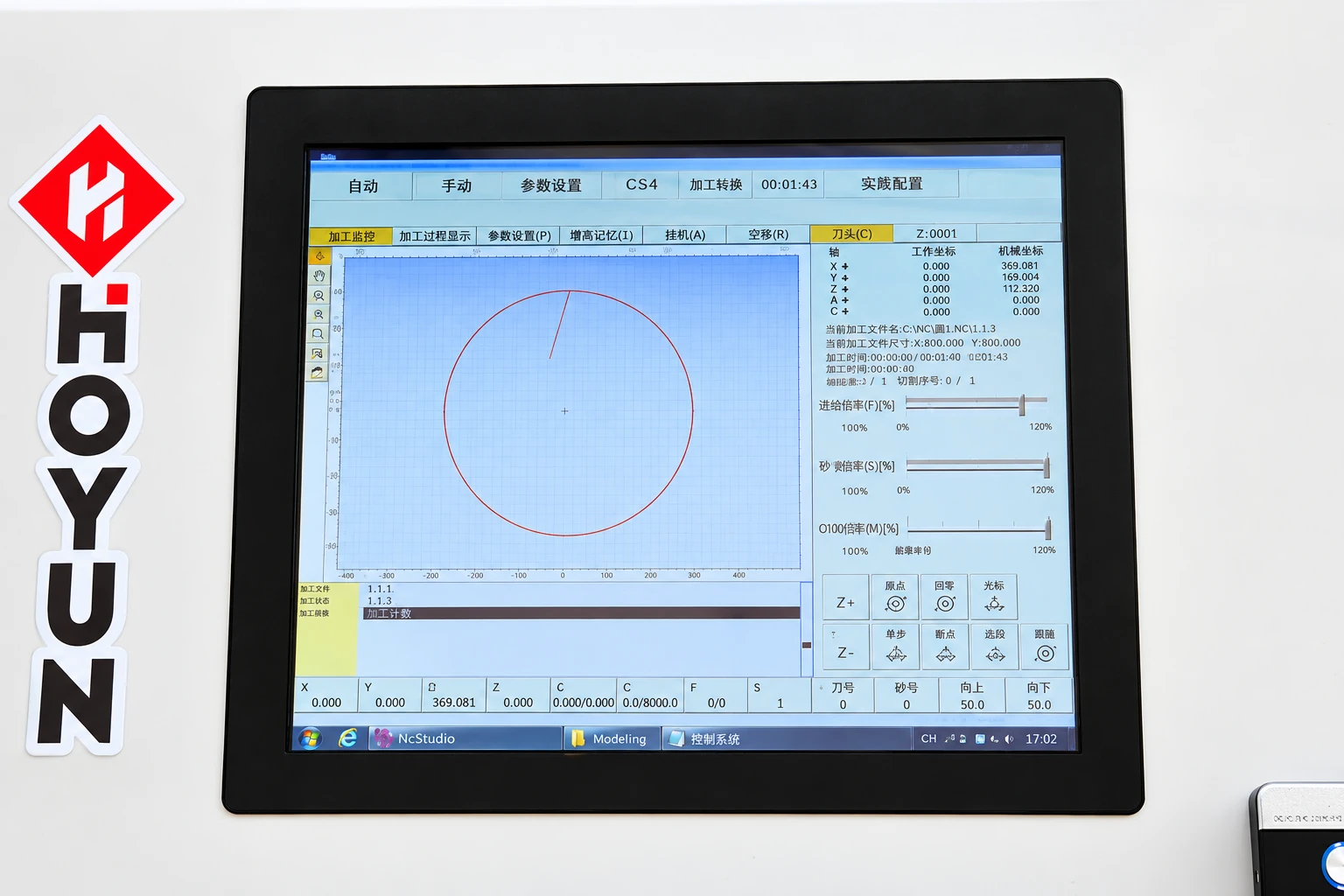
Import supported CAD drawings and prepare cutting paths from the waterjet control interface.
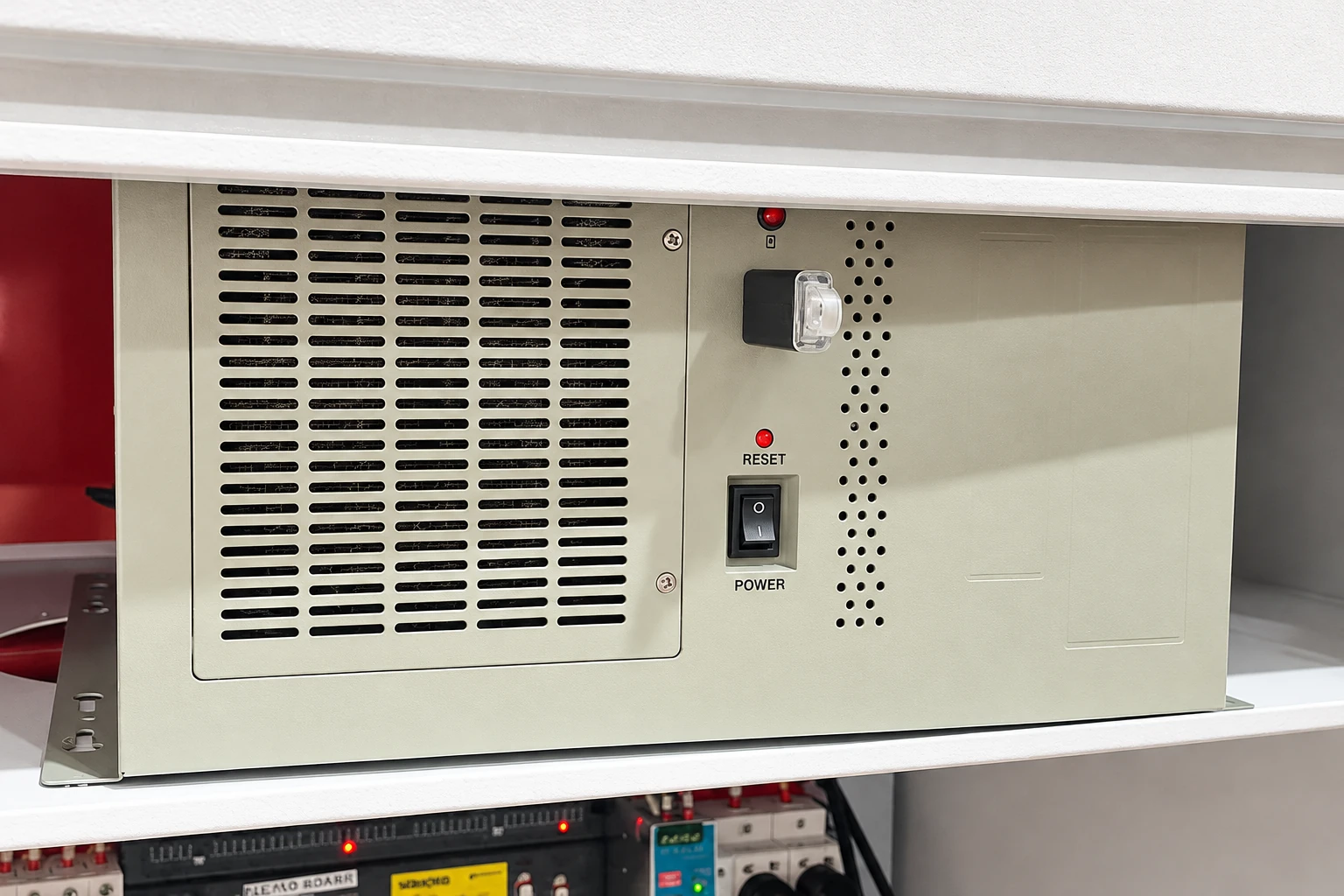
An industrial computer supports the machine-control environment and drawing-based operation.
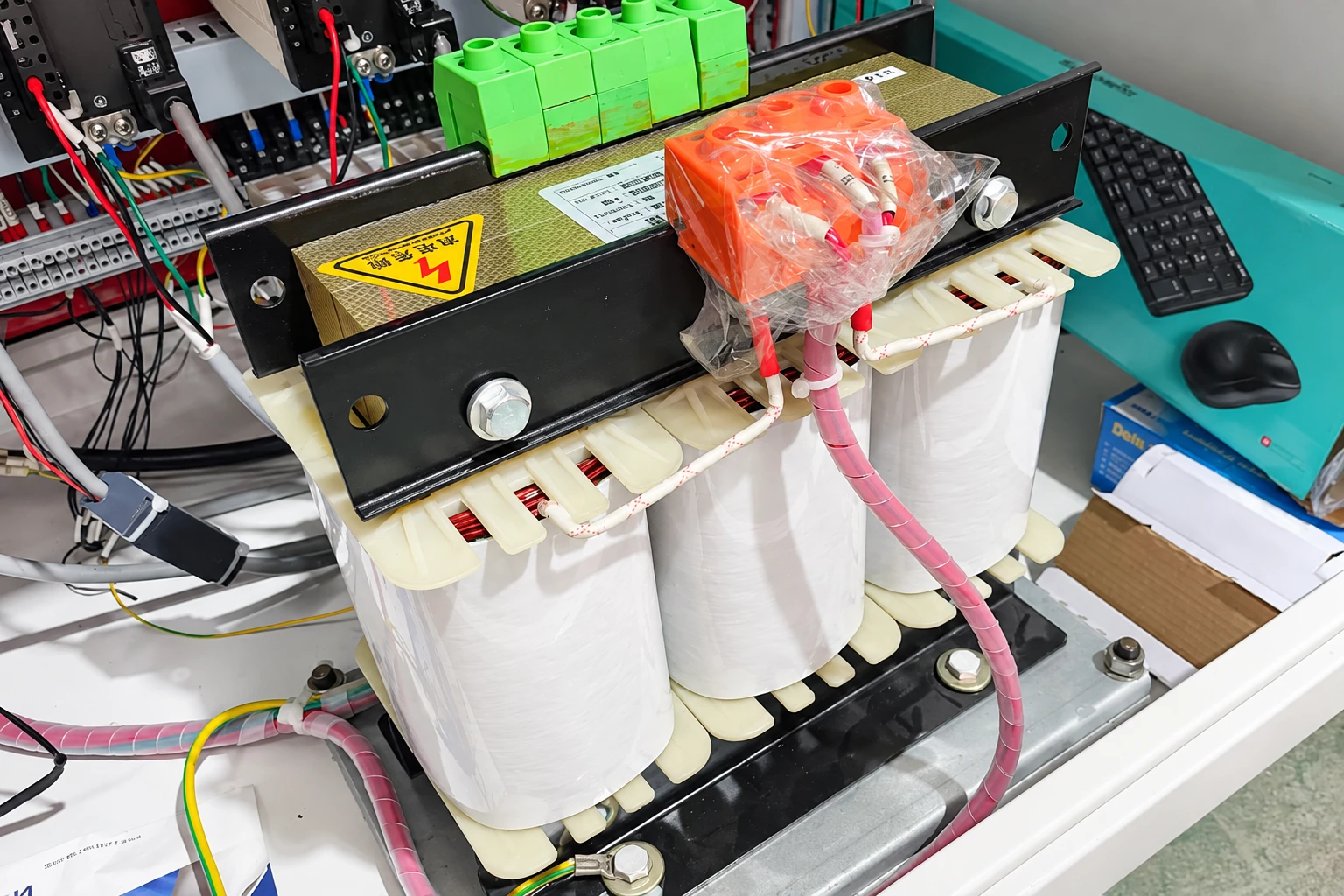
The illustrated electrical configuration includes a transformer and protection components for the drive system.
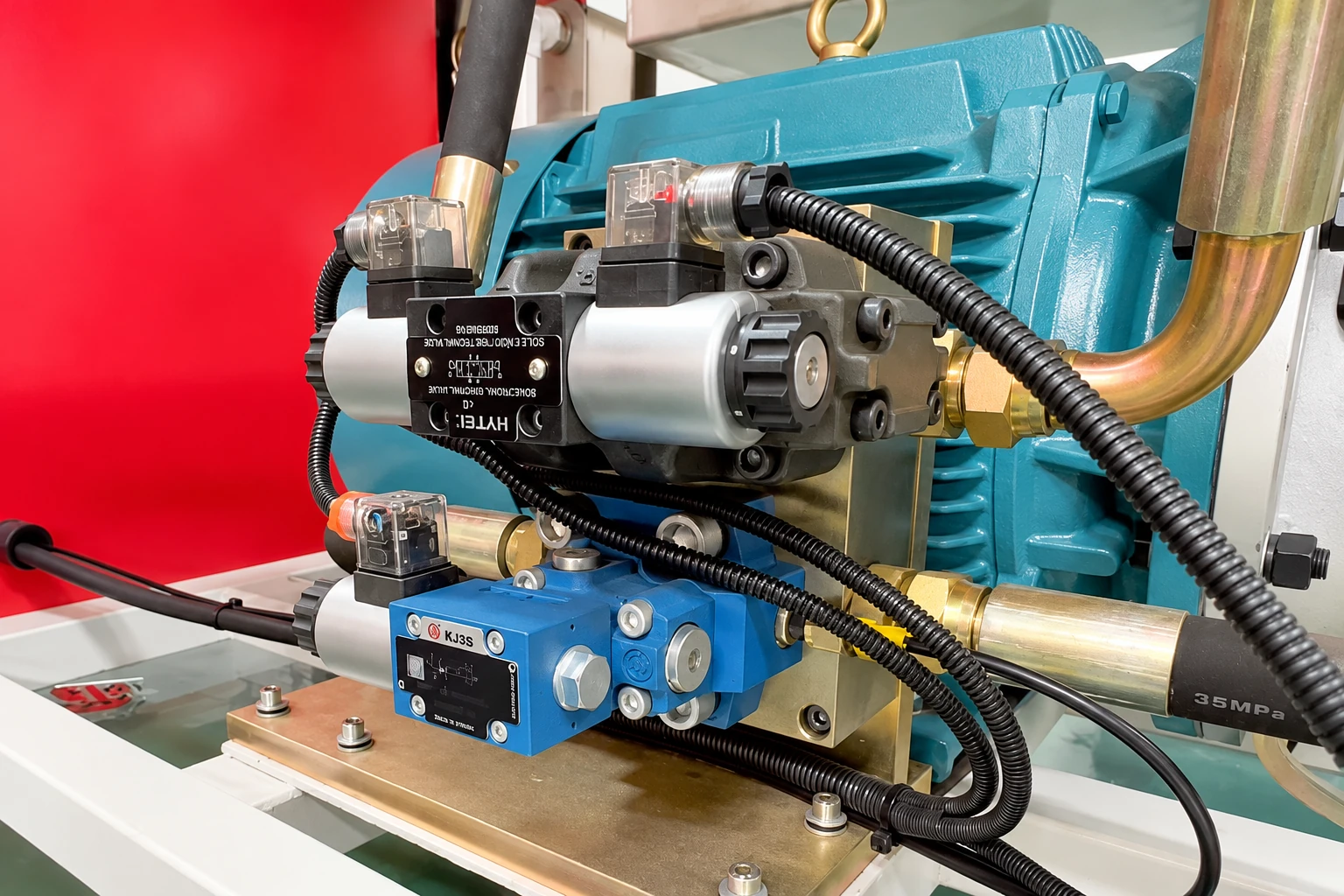
The reversing valve is part of the intensifier’s hydraulic circuit. Keep access clear for inspection and service.
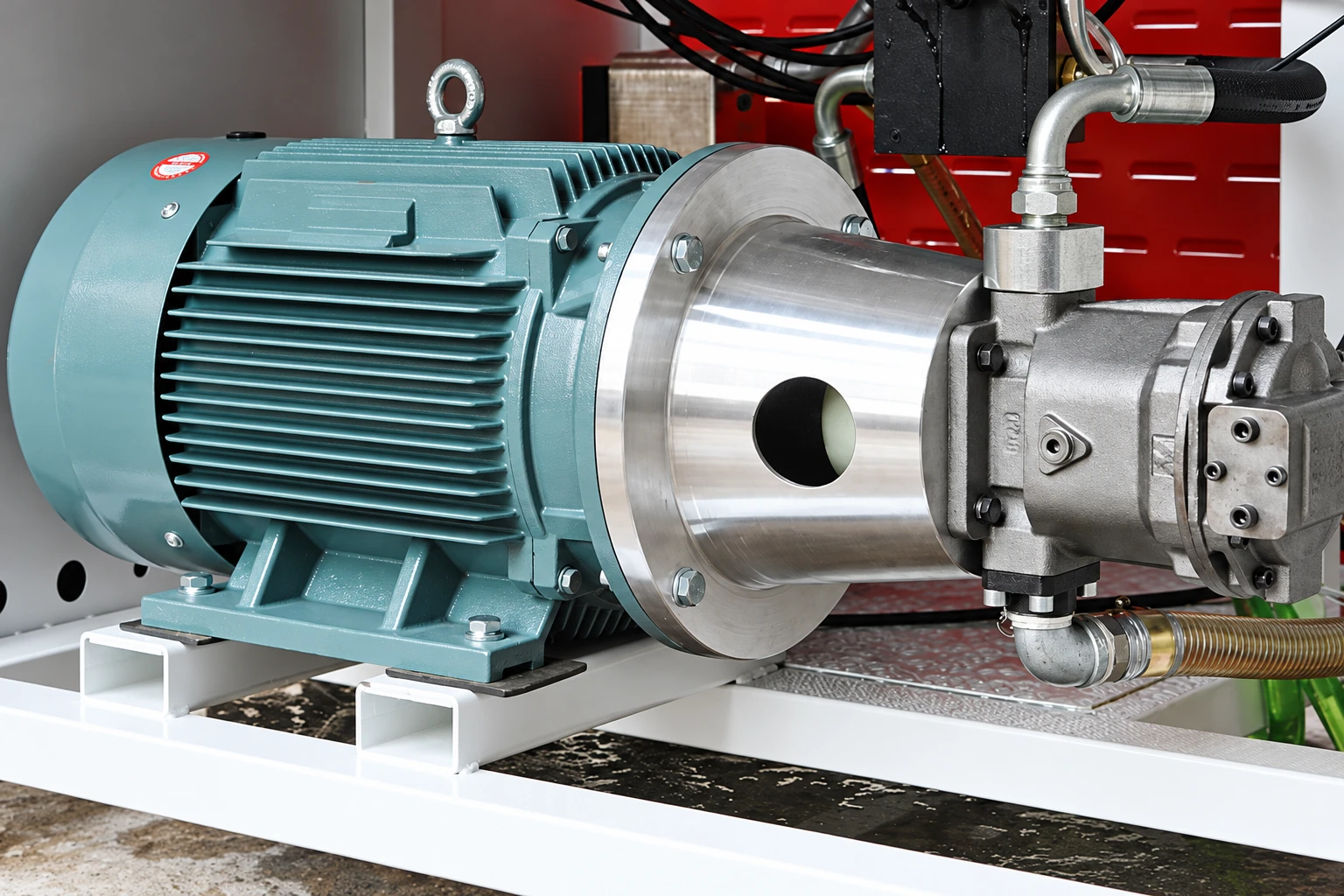
The hydraulic circuit groups the pump, valves and pipework for inspection and maintenance.
04 / Pressure system
The hydraulic booster supplies ultra-high-pressure water to the cutting head. High-pressure components and a variable oil pump manage the supply; soft-start protection and touchscreen monitoring support daily operation.
Confirm the supplied pressure-system configuration and operating settings for your material and cutting process.
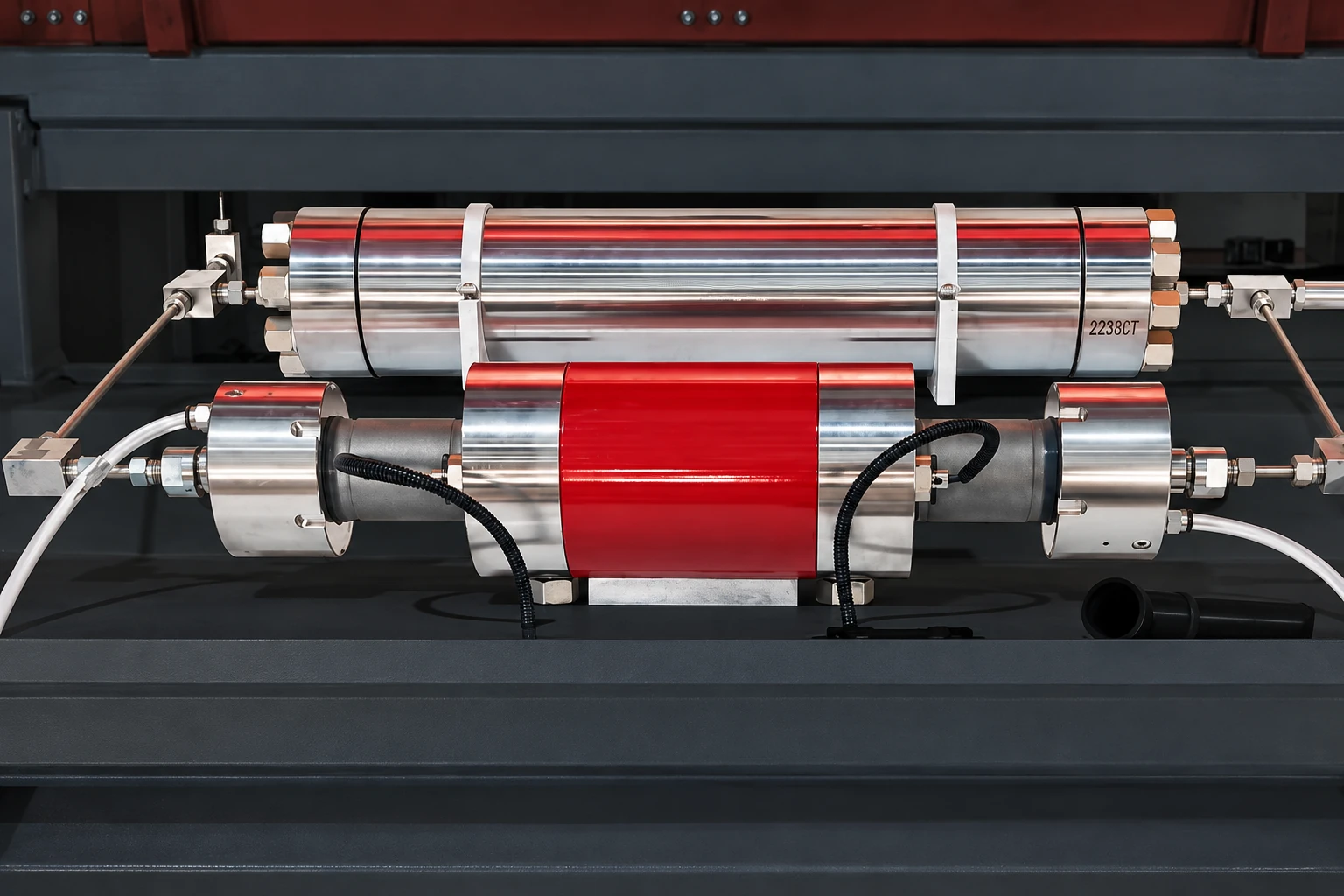
International-brand high-pressure components form the core of the booster. They are selected for reliable pressure delivery and service life during waterjet cutting.
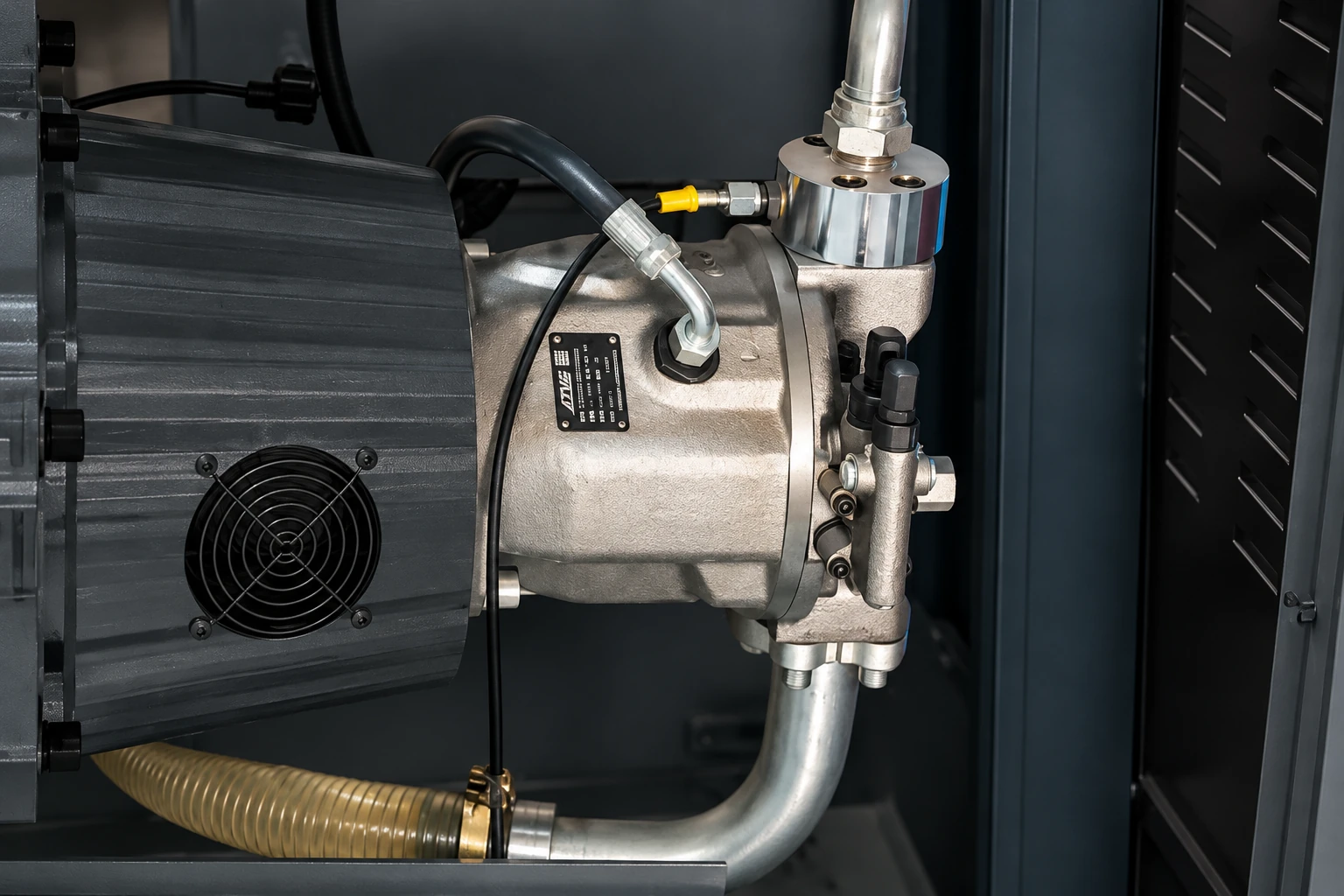
The variable oil pump regulates the hydraulic supply used to generate cutting-water pressure. Adjusting the oil supply to cutting demand helps manage the booster output during operation.
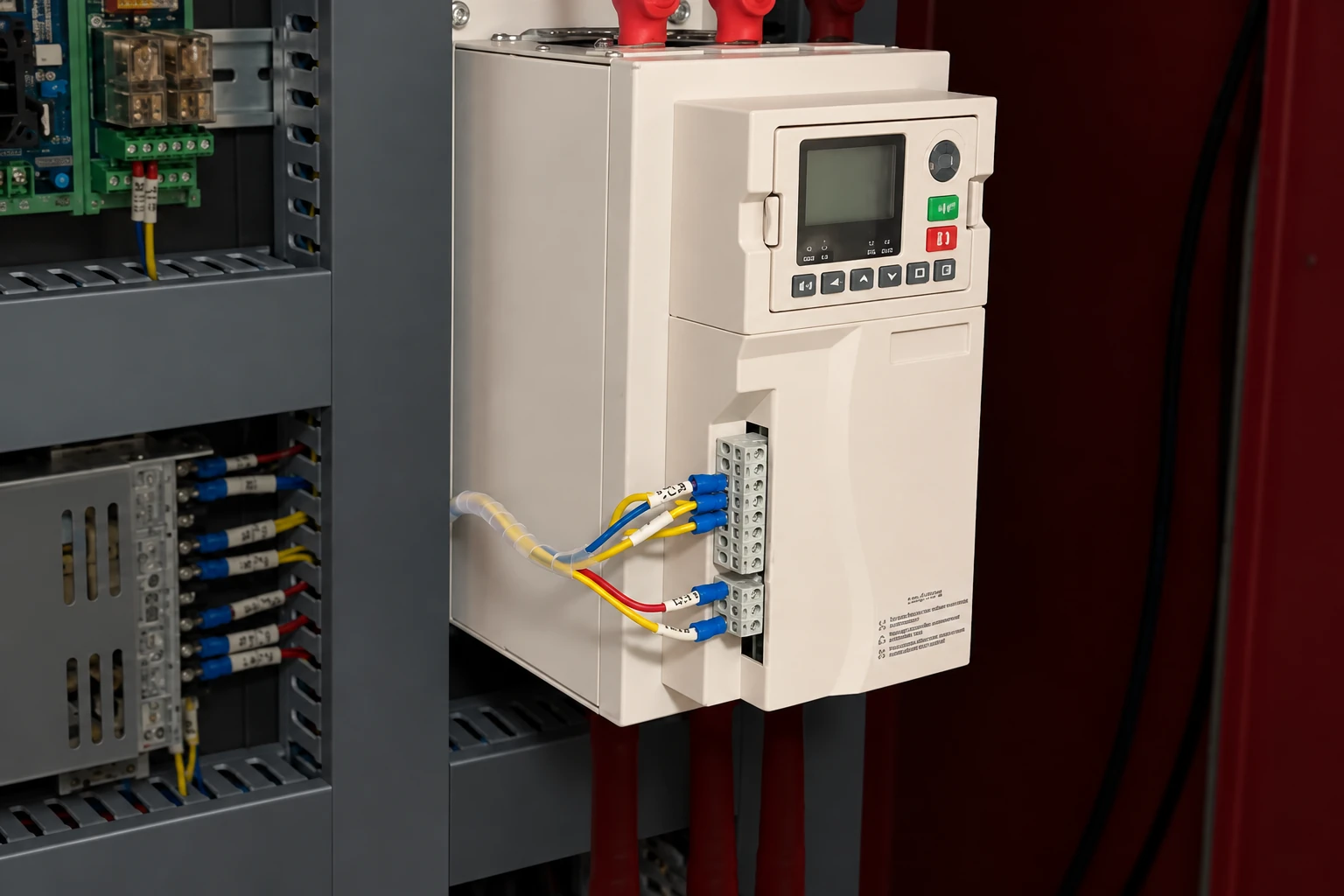
Soft-start protection manages the startup sequence of the booster. It limits abrupt loading as the system starts, before the machine reaches its selected operating condition.
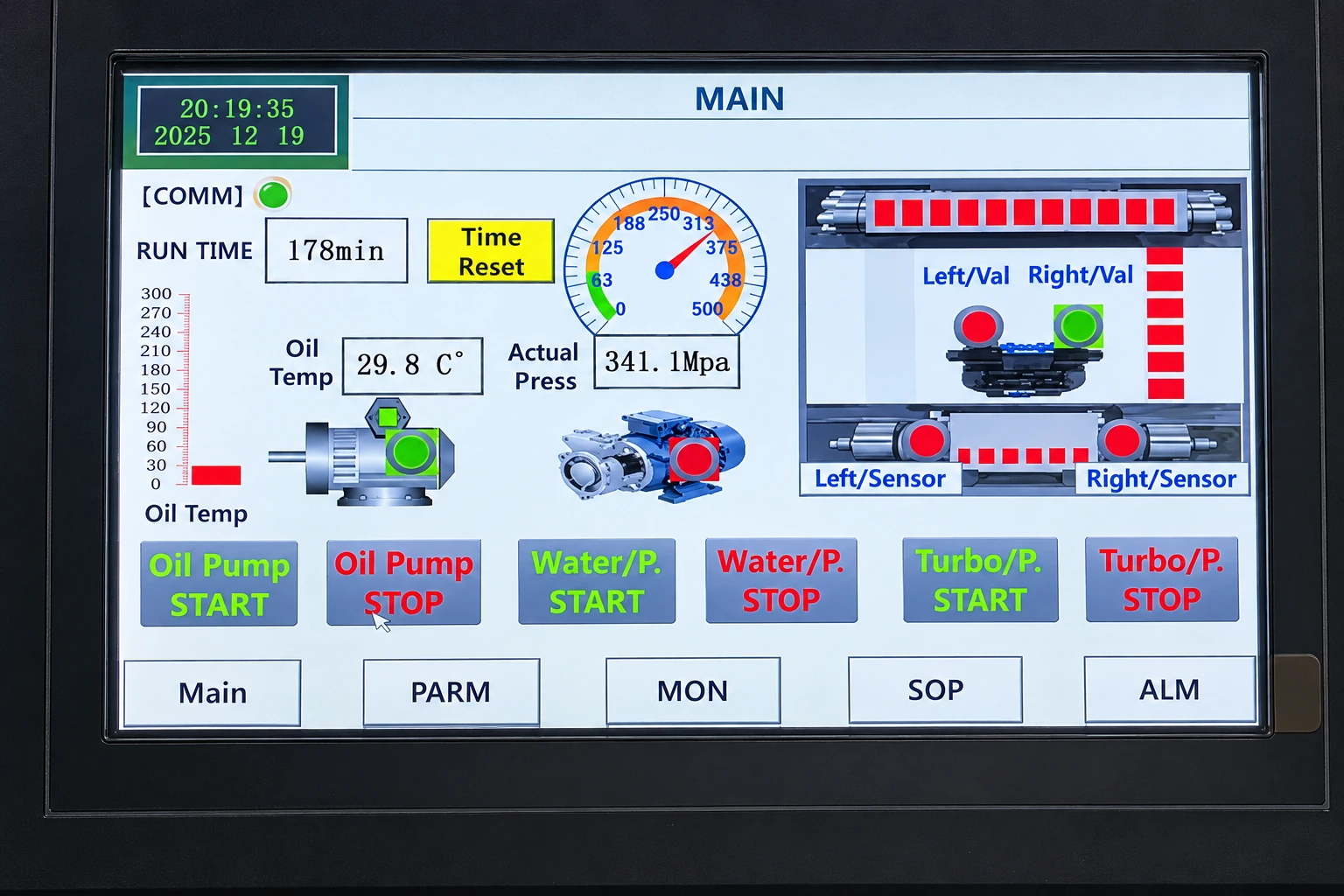
The touchscreen displays operating information and warning messages during use. Operators can review system status and adjust the available parameters from the control interface.
05 / Configuration
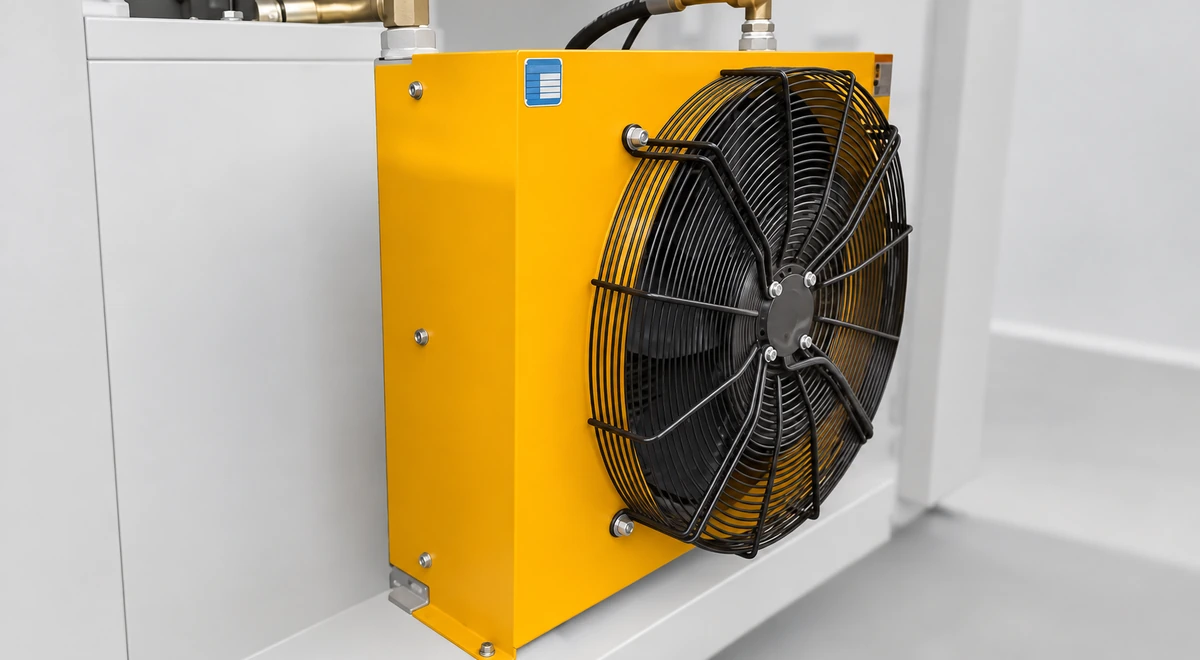
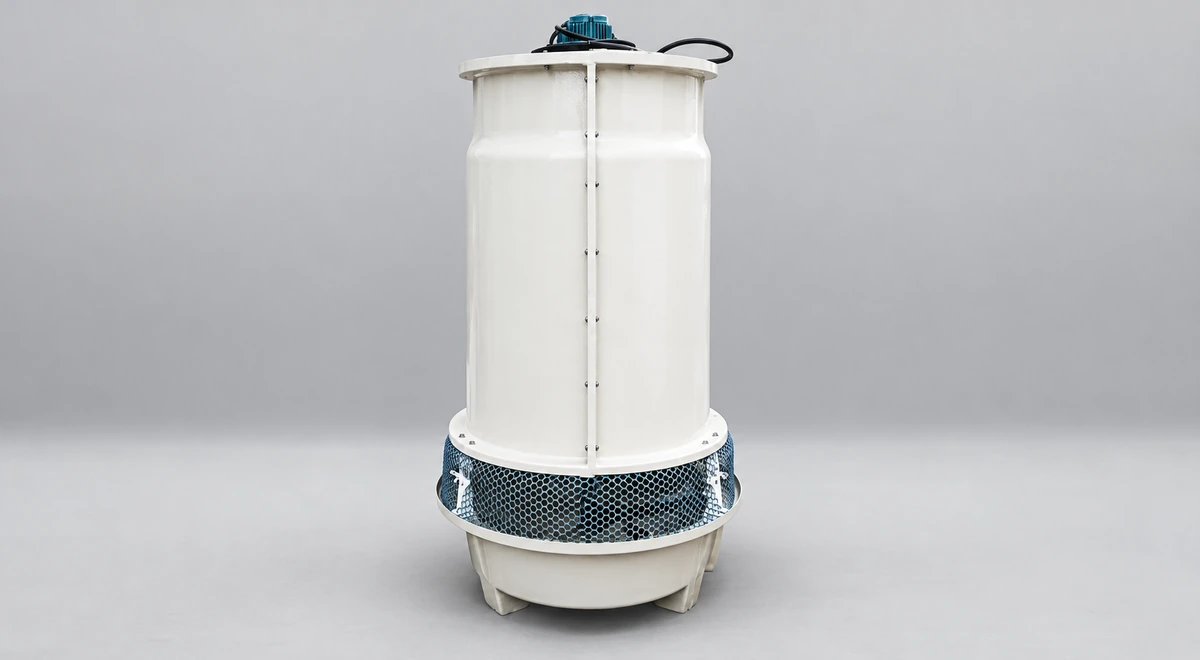
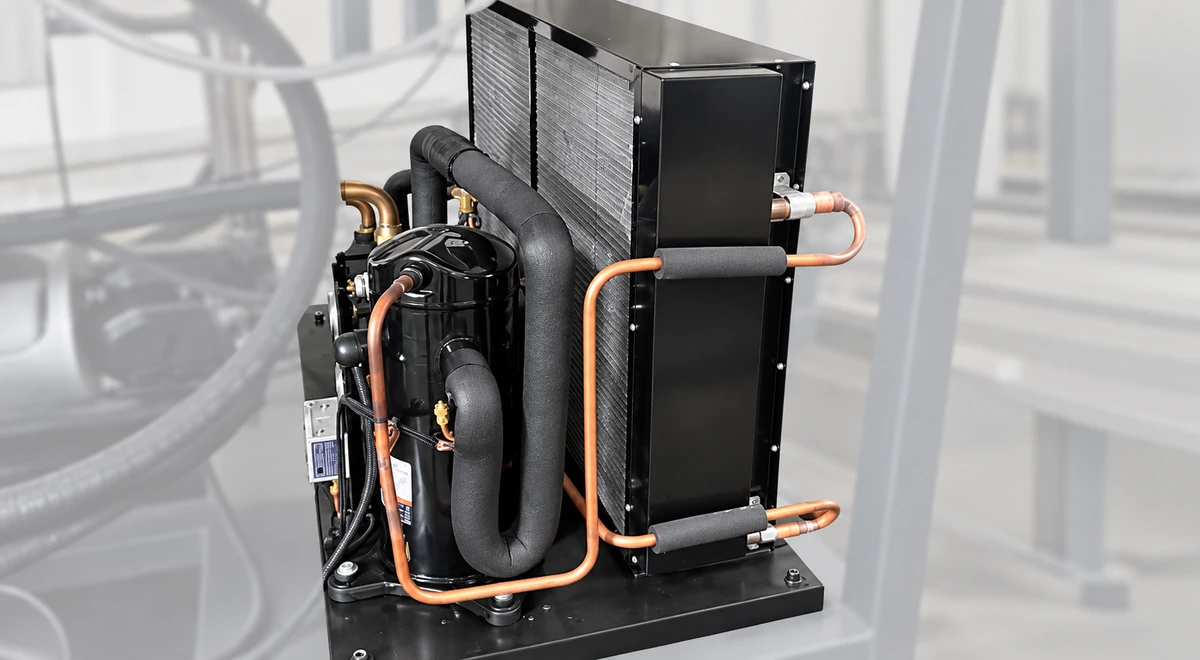
Select the cooling method for your climate and operating conditions. Confirm the supplied equipment and installation requirements with your quotation.
Select air, water or oil cooling to suit your climate and operating conditions.
06 / Questions
The AB configuration controls the head angle along curved and fitted cutting paths. Share the intended edge, part geometry and assembly requirements to confirm a suitable configuration.
The AB configuration is a waterjet cutting platform. For relief engraving, recessed details or drainage grooves made with a spindle, review Waterjet & Engraving.
Compare the part with the machine’s usable cutting travel, then allow for support, loading and service access. The listed table dimensions are not the same as the axis travel.
Related machine news
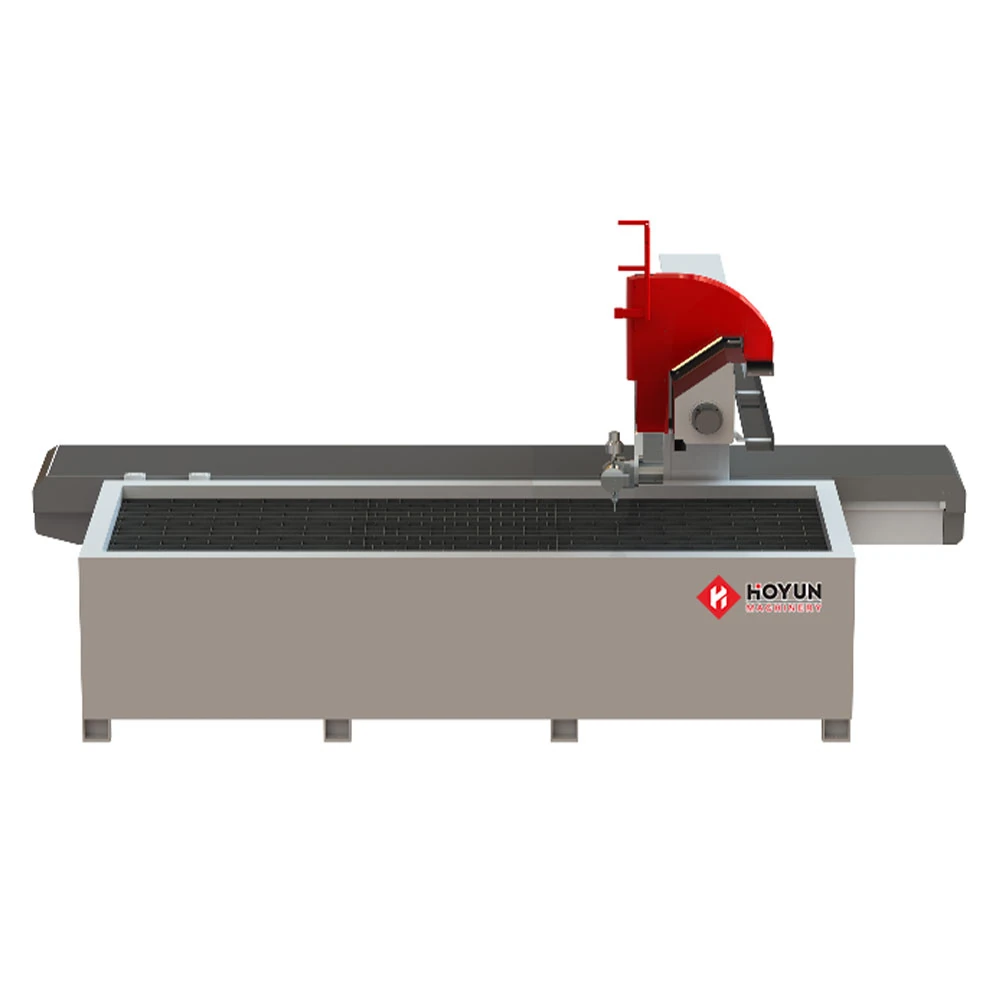
Check high-pressure testing, cooling, spare parts and the written configuration when evaluating waterjet reliability.
Read article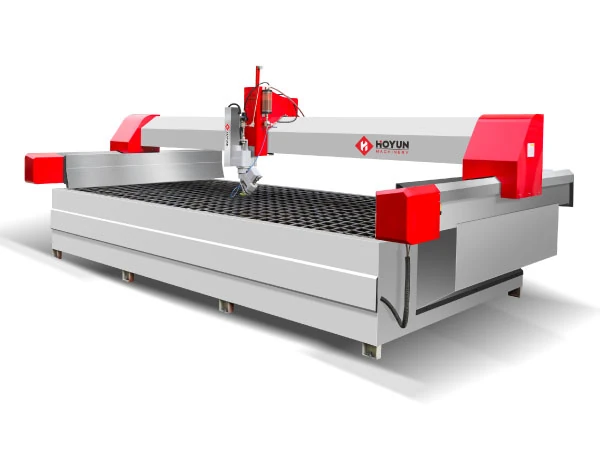
Review waterjet quotations, high-pressure systems, consumables and the checks to make before ordering.
Read article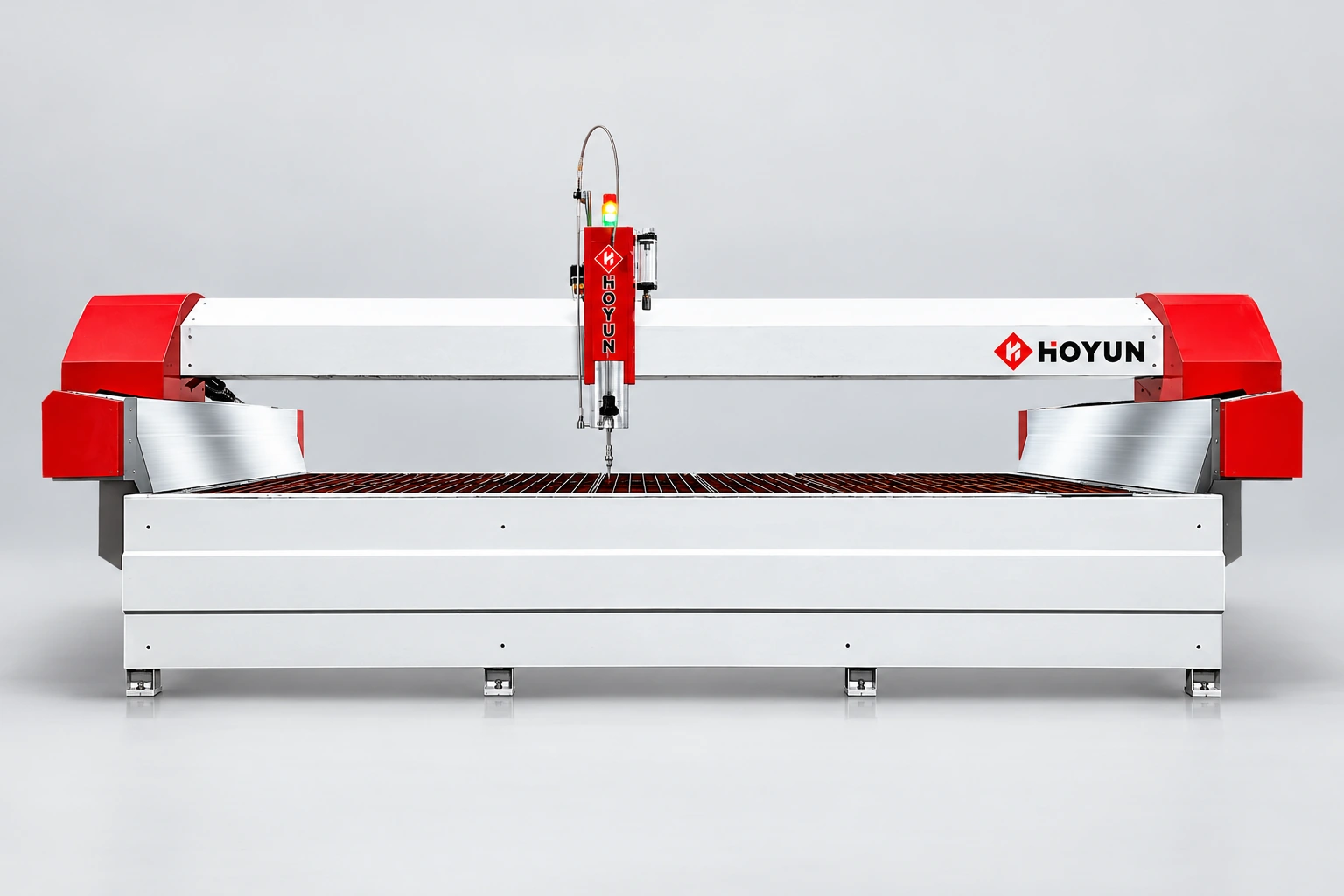
Waterjet cutting machines offer unparalleled precision and versatility, but operational costs can add up quickly. Whether you’re running a small workshop or a large manufacturing…
Read article
Talk to HoYun
Tell us what you make. Include the material, workpiece dimensions, required processes and target output. Add the model if you have a machine in mind.
Explore all machines