


In 2027, stone and sintered-stone fabrication shops still face the same first question: what does mașină de tăiat cu jet de apă price really tell you? The number on a quote is only a starting point. What matters more is whether the high-pressure system holds under load, what the quote leaves out, and how the machine runs after a year of two-shift cutting.
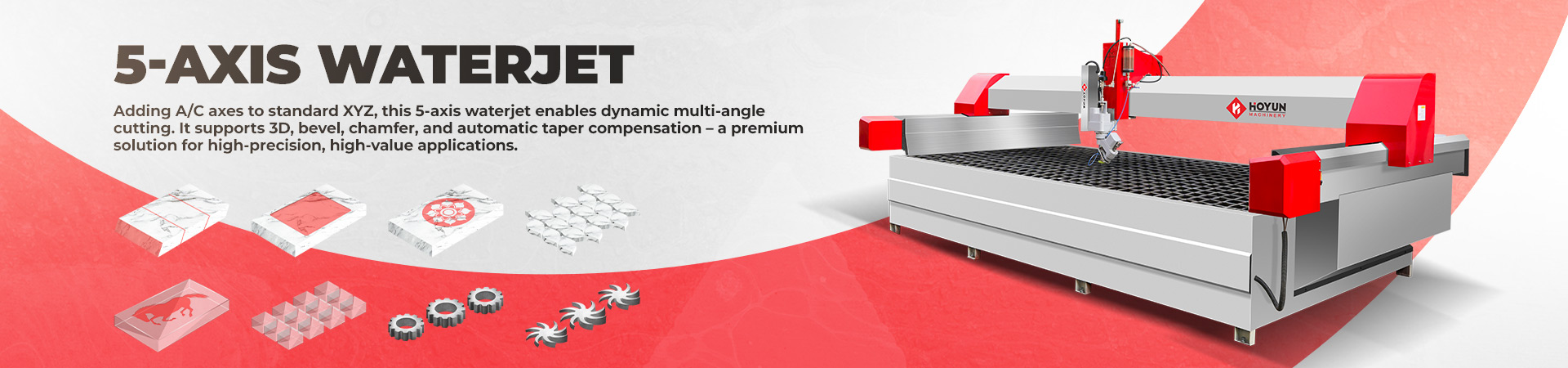
Most buyers ask us the same first question: what’s the waterjet cutting machine price? Here’s our straight answer. At HOYUN MACHINERY, a stone waterjet / CNC waterjet for stone, marble, granite, quartz and sintered stone usually lands between USD 40,000 and USD 50,000. Where it falls depends on cutting size, the high-pressure system, the control system and the options you pick. Treat that as a reference range, not a fixed quote. Whether you need an industrial waterjet cutting machine or a Jet de apă cu 5 axe for complex contours, compare configurations—not just stickers.
You’ll also see machines advertised at around USD 30,000, sometimes less. We won’t tell you every one of them is junk. What we will tell you is that the sticker number says very little on its own. The better questions are what’s inside the frame, what’s left out of the quote, and how the machine holds up after a year of two-shift cutting.
HOYUN Machinery (hoyunmachinery.com) focuses on stone and building-material processing equipment—making building-material processing simpler. This guide breaks industrial waterjet price into the parts that actually move ownership cost.
1. Why Two CNC Waterjets That Look the Same Can Be Priced Far Apart
Put two CNC waterjet machines side by side on a showroom floor and they can look like twins. Open the panels and the story changes. The money sits in six cost centers:
- High-pressure system
- Main motor
- Hydraulic pump
- Control system
- Cutting platform
- Electrical parts
When you evaluate a Sistem cu jet de apă cu 5 axe, start with these six—not brochure paint or a printed maximum pressure alone.
1.1 The high-pressure system
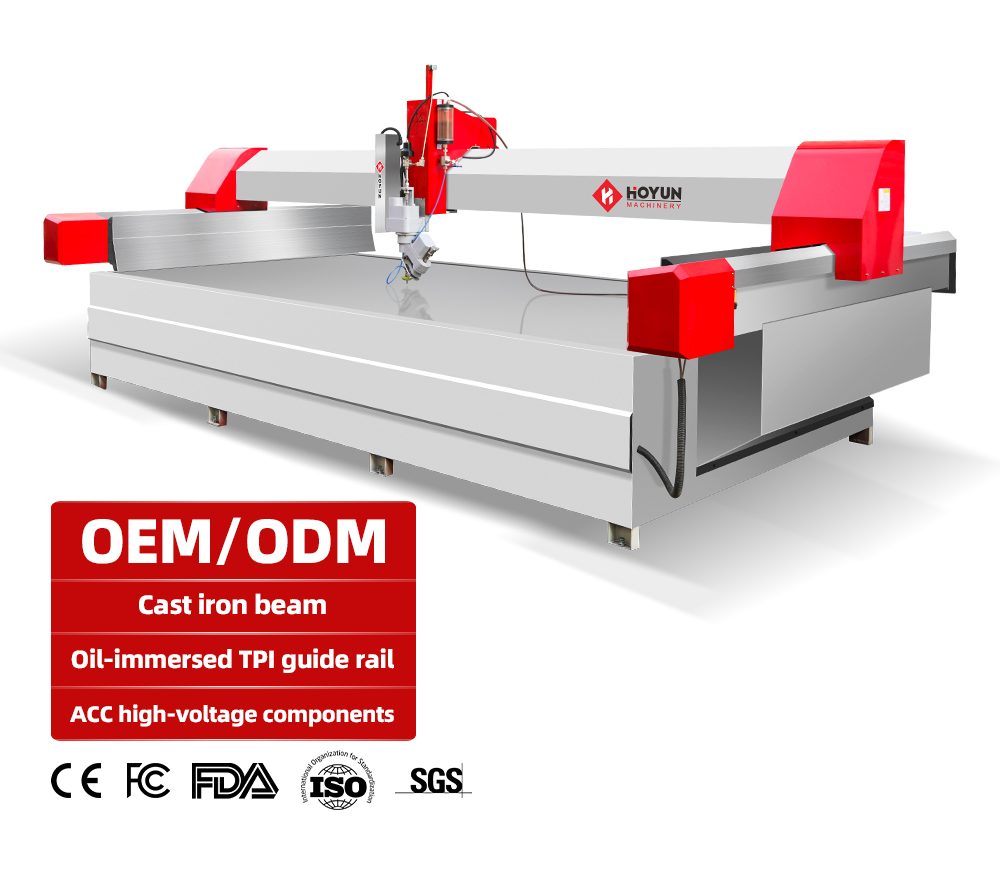
This is the heart of the machine and one of its most expensive assemblies. On selected HOYUN configurations we rate maximum pressure at 420 MPa, with a typical working pressure around 360 MPa and water flow of roughly 3.7–3.8 L/min.
Those three numbers only mean something next to a fourth: how long the machine can run there. Anyone can print 420 MPa on a brochure. Ask to see the pump holding steady pressure under realistic load, and ask how it’s cooled and maintained while it does.
1.2 Main motor and hydraulic pump
Some lower-priced systems run a 30 kW main motor; other configurations use 37 kW. The right size depends on hydraulic design, target pressure, flow and efficiency, so a smaller motor isn’t wrong by default. But if two machines promise similar pressure and flow, find out whether the lower rating limits continuous running.
Look at the pump control too. Some systems use manually adjusted displacement pumps, others use more automated control. Whichever you’re offered, you want stable pressure, sensible flow control, reasonable power draw and a pump that doesn’t need babysitting.
2. Where a USD 30,000 Industrial Waterjet Cutting Machine Can Cost You Later
A low price is tempting, especially for a shop that’s just opening. Before you sign, work out whether the saving comes from efficient manufacturing or from cuts to parts, machining and quality control. These are the four places we’d look.
2.1 High-pressure parts
Cylinders, seals, valves, fittings and tubing take a beating every shift. Material grade, heat treatment, precision machining, surface finish and assembly all decide how long they last. Get any of it wrong, or spec the wrong part, and you see leaks, seals wearing out early, or a high-pressure line letting go. Not every cheap machine fails this way. Still, ask for component specs, pressure test records, maintenance intervals and spare-part availability.
2.2 Electrical and servo parts
The control cabinet is an easy place to trim cost. Servo motors, drives, low-voltage components and controllers differ in performance, documentation, service support and how long they’ll stay in production. A cheaper brand can be fine if the supplier can explain why it suits the machine. “High-quality electrical system” isn’t an explanation. Ask for the full component list.
2.3 Build quality you can’t see in a photo
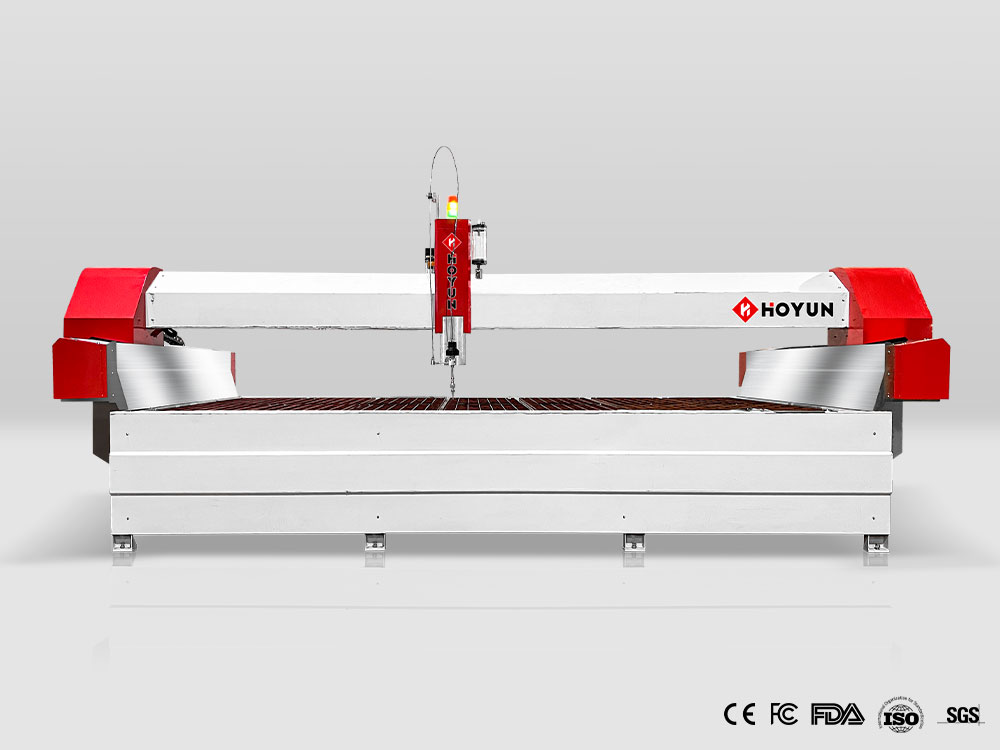
Paint and sheet metal tell you nothing about the cutting platform structure, guide rails, transmission, high-pressure assembly, hydraulic circuit or cooling layout. Look there.
2.4 Running costs
Real ownership cost includes seals, valves, cutting nozzles, abrasive feed parts, maintenance labor and the hours your saw sits idle waiting for a part. If wear parts go fast or support is hard to reach, a cheap machine becomes an expensive one.
3. What to Ask About Each Component
Before you order, send this table to any waterjet cutting machine manufacturer—including us:
| Component | What to ask the supplier | What a good answer looks like |
|---|---|---|
| High-pressure system | Max and recommended continuous working pressure? Flow? Cooling? | Clear rated figures (e.g. 420 MPa max / ~360 MPa working / ~3.7–3.8 L/min) plus a live demo at working pressure |
| Main motor | 30 kW or 37 kW, and why for this pressure and flow? | A reasoned match to hydraulic design, not just a number |
| Hydraulic pump | Manual or automated displacement control? | Stable pressure, flow control and power draw explained |
| Servo, drives, controller | Brands and models? Documentation? Long-term supply? | A full written component list |
| Cutting platform and rails | Structure, guide rails, transmission? | Willing to show the build, not just the cover |
| Wear parts | Which parts are consumables, and how are they changed? | A demonstrated replacement procedure and parts stock |
Note: Pressure / flow figures above are examples from selected HOYUN configurations—they show what a clear answer looks like; they are not a fixed promise for every model.
4. A Practical Buyer Checklist Before You Order (7 Points)
We’d rather a customer test us hard before the order than complain after it. Use this list with any waterjet cutting machine manufacturer, including us:
- Stable high-pressure running under your intended working conditions
- Cutting on your material, not the supplier’s favorite sample
- Measured cutting accuracy and edge quality
- Cooling and routine maintenance procedures shown in person or on video
- A common wear part actually replaced while you watch
- Electrical component list and technical documentation in writing
- After-sales support and spare-parts arrangements confirmed
Sintered stone waterjet: thin-slab (6 mm) test
If you cut thin sintered stone, insist on a 6 mm test with a sintered stone waterjet setup. Thin slab shows up handling, clamping, cutting and chipping problems fast. For 12 mm sintered stone, quartz and granite, match the test to the finish and production speed you actually need. A factory acceptance test is only worth something when both sides agree on the material, the measurable targets and the written results beforehand. If countertops and openings are your main work, also see the countertop cutting machine guide.
5. Machine Price vs. Landed Cost (FOB)
The quote is only part of the waterjet cutting machine cost. If you’re buying a waterjet machine from China, add ocean freight, insurance, customs duties, import taxes, port charges, inland transport, installation, training and spare parts.
Under FOB terms, confirm the named loading port and who carries which responsibility under the agreed Incoterms rules. Duties and taxes depend on your country, the customs classification (HS code) and local regulations. Before ordering, ask for a clear scope breakdown and work out the landed cost to get the machine standing in your factory. Comparing FOB numbers alone will mislead you.
6. Payment Terms: Both Sides Carry Risk
Here’s the honest picture. We have to buy materials, book production capacity, assemble and test the machine before it ships. You face several weeks at sea plus import costs on arrival. Both of us have real cash-flow concerns.
So the contract should spell out the deposit, production milestones, factory acceptance, payment at shipment, any deferred balance and when documents are released. If you need more flexibility, phased shipments or a suitable bank-backed payment arrangement can be discussed. Whatever you agree, put it in the signed sales contract. Don’t assume “industry practice.”
7. Choosing a Waterjet Cutting Machine Manufacturer
When three quotes land on your desk, don’t just circle the lowest number. Ask each supplier what high-pressure system is included, what the rated and recommended continuous working conditions are, which motor, pump and electrical parts are used, which materials and thicknesses they’ll demonstrate, what counts as a consumable, what acceptance tests they offer and what after-sales support comes with the machine.
You’re not looking for the most expensive machine. You’re looking for the right mix of performance, build quality, maintenance cost and long-term support for your shop. If orders also need slab breakdown, compare a 5-axis bridge saw with an AB 5-axis waterjet. If you want one multifunctional cell, look at a CNC Sawjet.
Related reading
- How to choose a 5-axis bridge saw and waterjet
- Bridge saw vs waterjet
- Sawjet vs multi-machine solution
- CNC Sawjet 4-in-1
- Sisteme cu jet de apă cu 5 axe
- Countertop cutting machine guide
8. Final Thoughts on Waterjet Cutting Machine Price
A USD 30,000 waterjet and a USD 45,000 waterjet can’t be judged by paint or by a maximum pressure figure. The gap usually comes from components, manufacturing, real running capability, service and what the machine costs you to own. A low industrial waterjet price isn’t the problem. Vague specs, performance nobody will demonstrate and compromises nobody mentions are.
Planning to buy a stone waterjet for quartz, marble, granite or sintered stone? Send us your materials, cutting dimensions and production targets. We’ll recommend a configuration and price it to what you actually need.
Request a Configuration-Based Quote · Website · CNC waterjet cutting machine product page
9. FAQ
How much does an industrial waterjet cutting machine cost?
HOYUN industrial waterjet cutting machine configurations (stone waterjet / CNC waterjet) typically cost USD 40,000–50,000, depending on cutting size, high-pressure system, control system and options. This is a reference range, not a fixed quote.
Why are some waterjet machines priced around USD 30,000?
Lower prices can come from efficient manufacturing or from savings on high-pressure parts, electrical components, machining and quality control. Ask for full component lists and a live cutting test to find out which—especially for sintered stone waterjet or 5-axis waterjet work.
Is a 37 kW waterjet motor better than a 30 kW motor?
Not automatically. Motor size should match the hydraulic design, target pressure and flow. When two machines promise similar pressure and flow, check whether the 30 kW unit limits continuous operation.
What affects waterjet maintenance costs?
Replacement seals, valves, cutting nozzles, abrasive feed parts, maintenance labor and production downtime. Part quality and access to technical support make the biggest difference.
What should buyers inspect before purchasing a waterjet machine?
Stable high-pressure running, cutting on your own material (including 6 mm sintered stone if you cut thin slab), accuracy and edge quality, cooling and maintenance procedures, wear-part replacement, electrical documentation and spare-parts support.
Does FOB pricing include international shipping?
No. FOB covers delivery to the named loading port. Ocean freight, insurance, duties, import taxes, port charges, inland transport and installation are separate under the agreed Incoterms rules and belong in your landed-cost sheet.