


From a customer conversation with Davis | HOYUN
When an Israeli customer approached Davis for a quotation, cutting speed was not his first concern. Downtime was. A friend had warned him that waterjets were prone to breakdowns, and he wanted to know whether buying one would mean waiting for repairs and spare parts while customer orders piled up.
That is a reasonable concern for a fabrication shop. A machine earns its place on the floor through more than a good demonstration cut. It also needs to suit the shop’s working conditions, and the team needs a workable maintenance and recovery plan.
For stone, sintered stone and ceramic fabrication, assessing waterjet reliability means looking beyond the pump brand and the maximum pressure on the nameplate. Ask how the high-pressure system is assembled and tested, how it will be cooled in your shop, which wear parts you should stock, and exactly what the quotation includes.

High-pressure systems: a maximum rating is not a production setting
Davis explains that some HOYUN configurations use high-pressure cabinets assembled and commissioned in-house. For a buyer, the important question is not simply how high the pressure can go, but how the complete system has been tested and which settings are approved for the work ahead.
A factory test pressure is not a continuous-production recommendation, and an in-house test is not independent certification. Check the pressure profile, load and duration against the test record for the machine being supplied. Operating settings must follow the manufacturer’s instructions for that machine, material and process.
Do not stop at “we have tested it.” Ask for records tied to the configuration you are buying: what was tested, at what pressure, for how long, under what cutting load, and with what inspection results. The cabinet, tubing, connections and cutting head form a system. A well-known component does not replace acceptance checks on the complete machine.
Davis highlights checks for oil leakage, cleanliness on the high-pressure side and the condition of the pressure tubing. Ask the factory to explain its inspection methods and acceptance criteria. Do not attempt your own pressure-limit test, open a high-pressure circuit or bypass protective devices. Testing and servicing pressure systems should be left to qualified personnel following the manufacturer’s procedures. Passing a factory test is not a promise that a machine will never leak or fail.
Cooling: start with the shop, not a ranking of cooling types
“Air cooling,” “water cooling” and “oil cooling” can sound like three directly comparable options. The labels alone do not tell you enough. Does “oil cooling” describe the fluid being cooled, or a particular cooling package with a refrigeration unit? Unless both sides mean the same thing, comparing quotations can be misleading.
Give the supplier the conditions the machine will actually face: summer shop temperatures, continuous operating hours, the available cooling-water supply, inlet-water temperature and stability, and the space available for heat rejection and maintenance.
Then ask the supplier to identify the cooling arrangement, the equipment included in the price, its operating limits and the utilities you must provide. Any proposed oil-temperature range should come with its operating conditions: ambient temperature, cooling-water temperature and supply, and machine load. A temperature achieved in one installation is not an unconditional promise for another.
This is one reason to include sustained operation in acceptance testing. A cut made just after startup does not show whether the cooling system can support your production schedule without temperature-related interruptions.
A two-year spare-parts plan is not a two-year service-life promise
Davis recommends discussing a stock of common wear parts intended to cover roughly two years of anticipated use. The purpose is to reduce time spent waiting for replacements—not to suggest that each part lasts two years, or that the machine needs no maintenance during that period.
Quantities should reflect shifts, materials, workload, maintenance arrangements and local replenishment times. Ask for an itemized list with part names, numbers, applicable configurations, suggested quantities and prices. Routine consumables and warranty coverage should be clearly distinguished.
Also establish how faults will be diagnosed, who will guide replacement work and where parts will ship from. If your own team handles routine maintenance, agree which tasks still require a manufacturer’s technician.
A realistic allowance for maintenance and spare parts is more useful than a low purchase price on its own. For the initial investment, the waterjet cutting machine price and cost guide provides related reading. But the lowest quotation is not necessarily the lowest downtime cost.
Put the configuration in writing
High/low pressure switching: watch the full process
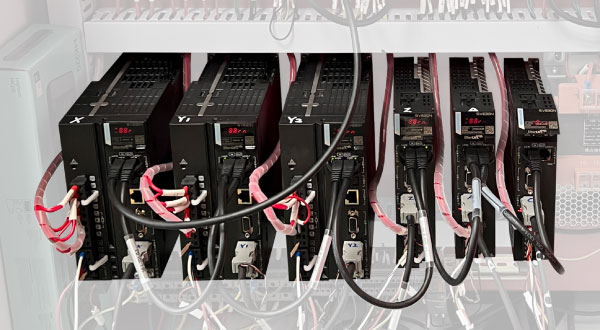
Davis identifies high/low pressure switching as standard on the configuration discussed with the customer; confirm its inclusion in the model you are buying. The intended process is to pierce at lower pressure before moving to higher-pressure cutting, helping reduce the risk of cracking during piercing. Results still depend on the material and process; this is not a guarantee against slab breakage.
Bring your own material and drawings to the trial. Ask to see the complete piercing-to-cutting sequence, and record whether pressure switching is included in your particular order.
Five-axis heads and height following: prove them on your work
Davis also describes a waterproof aluminum-alloy A/C five-axis head and a laser height-sensing arrangement. Their availability and specification need to be checked model by model. “Waterproof” should not be interpreted as inspection-free or maintenance-free.
Slab warpage can complicate height control and bevel cutting. Do not treat a warpage measurement from one slab as a tolerance for all material. What matters is how the proposed height-following system responds to your actual slabs, and whether the finished bevels and joints meet your job requirements.
Agree on samples, measurement methods and acceptance criteria rather than relying on an unverified accuracy claim. When reviewing the HOYUN AB five-axis waterjet product page, compare it with the final technical schedule. Do not assume that the AB product and the A/C head Davis describes are interchangeable specifications.
Milling, sludge removal and lubrication: check the scope and upkeep
An independent milling spindle may be worth discussing for sink work and drain grooves. Confirm the operations, tooling and software through sample work; do not assume that every waterjet includes the spindle or the same capabilities.
Automatic sludge removal deserves a separate cost comparison. It may reduce manual tank-cleaning work, but establish whether it is optional, what equipment is included and how that equipment itself is cleaned and maintained. Request a current, itemized quotation rather than relying on a price from an earlier project discussion.
Davis also describes an in-house high-pressure rotary joint and oil-bath lubrication for guide rails, racks and sliders. Check which machine these descriptions apply to and obtain its maintenance instructions. In-house manufacture does not automatically prove greater reliability, and oil-bath lubrication does not mean lifetime, maintenance-free operation. Replacement-part availability and clear servicing requirements matter too.
A practical factory acceptance checklist
Send your proposed checklist before the factory visit—not when the machine is about to be loaded for shipment.
| Area to check | Evidence or agreement to request |
|---|---|
| High-pressure system | Assembly inspections, operating records and explanations of any corrective work, matched to the delivery configuration |
| Cooling | Ambient and cooling-water conditions, sustained load and temperature records; responsibility for additional equipment |
| Actual cutting | Your material and drawings, with piercing, straight cuts and any bevel samples required by your jobs |
| Configuration | Written inclusion or exclusion of pressure switching, five-axis head, height following, milling and sludge removal |
| Parts and maintenance | Part numbers, suggested stock, maintenance tasks and replenishment arrangements |
| Сервис | Reporting channels, remote diagnosis, conditions for on-site assistance and responsibility for costs |
“Technical support available” is not a complete service agreement. Establish what photographs, operating information and alarm records the supplier will need, who decides the next action, and what happens if remote assistance cannot resolve the problem. Do not assume a response time that has not been agreed.
Frequently asked questions
Does a well-known pump brand guarantee a reliable waterjet?
No. The brand is one consideration, but assembly, cooling, working conditions, maintenance and service arrangements still need to be assessed together. Compare complete delivery packages, not just nameplates.
Is a higher maximum pressure always more useful?
Not necessarily. The relevant questions are what your material and process require, and what operating conditions the specific machine permits. A test pressure is not a substitute for approved production settings. Buyers should not carry out their own high-pressure limit tests.
Should a shop in a hot climate automatically choose “oil cooling”?
First clarify the equipment and cooling circuit behind that label. Then assess the proposal against shop temperature, cooling-water availability and workload. There is no useful universal ranking based only on names, and no temperature guarantee without operating conditions.
What should a first-time buyer prioritize on a limited budget?
First budget for the basic cutting configuration, safety requirements, cooling equipment, spare parts and service needed for the actual work. Evaluate milling and sludge removal against your orders, without letting extra functions displace essential system and maintenance provisions.
Define the working conditions before choosing the machine
The Israeli customer’s concern was ultimately not about a badge on a pump. It was about keeping orders moving when a machine needed attention.
No slogan proves reliability. A stronger basis for a purchasing decision is a documented combination of operating conditions, trial-cut results, configuration, parts supply and service responsibilities. Explore HOYUN waterjet equipment for stone and ceramic fabrication, then discuss your project with your materials, drawings, shift pattern and cooling conditions available.
About HOYUN Machinery
According to company-provided materials, HOYUN Machinery(鸿运机械)was established in 2008 and manufactures equipment for processing stone, sintered stone and ceramic materials. Its product range includes bridge saws, waterjets and Sawjet machines. Official website: hoyunmachinery.com.
The customer discussion was shared by Davis | HOYUN. Model specifications, standard and optional equipment, test conditions and service scope are subject to the technical documents and contract agreed for the individual order.