


For sintered-stone and stone fabrication shops, equipment choice shapes capacity, floor-space use, and production cost. Two mature paths are common today: a Sawjet (4-in-1 combined platform), and a multi-machine line—typically a 5-axis bridge saw + 5축 워터젯 + 3-axis machining center.
Many buyers pause on the same question: buy one Sawjet, or configure dedicated machines separately? Both paths are valid. Neither is always “best.” This article compares them objectively across factory space, order mix, and labor cost, so you can match the path to your shop.
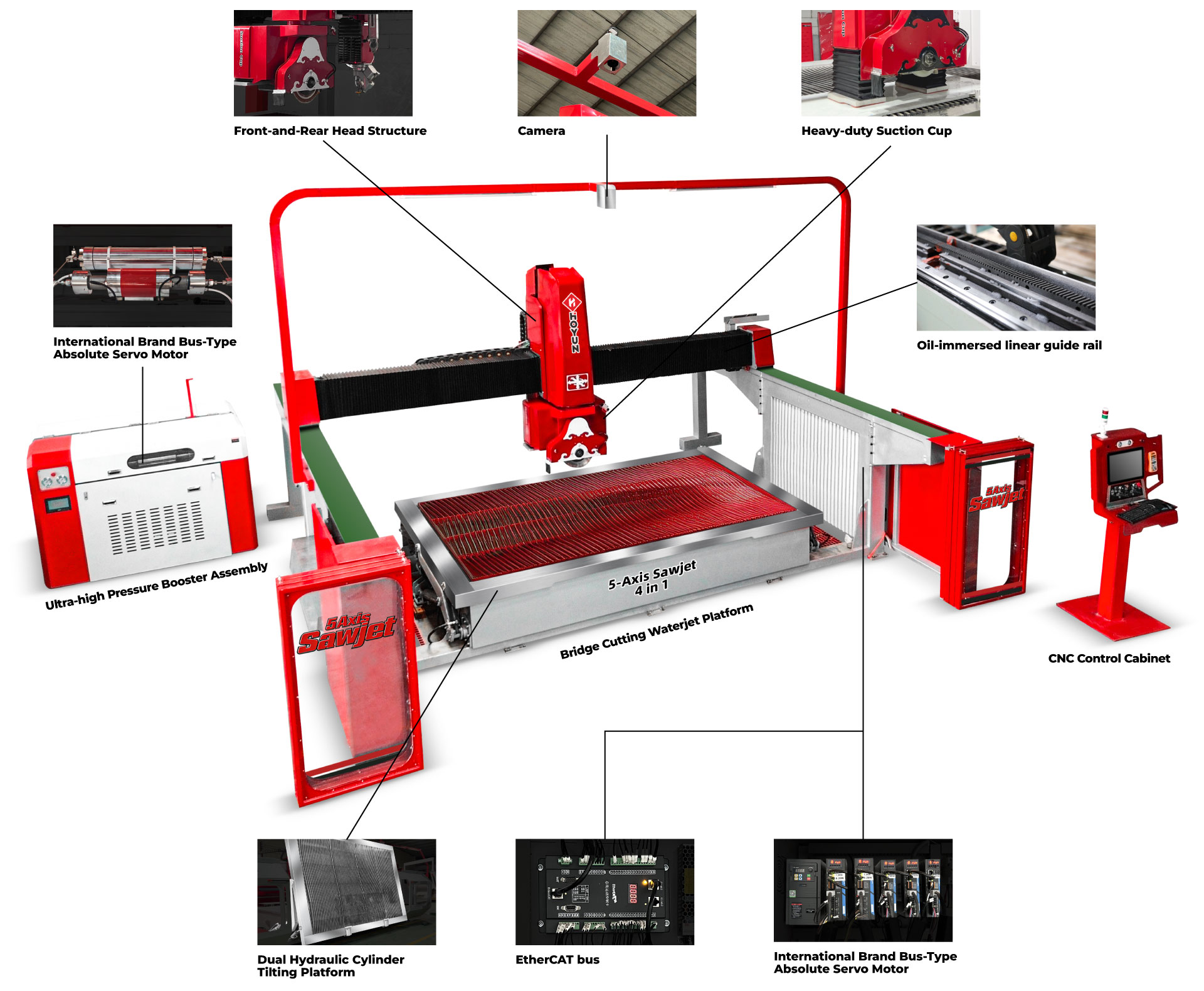
HOYUN Machinery focuses on stone and building-material processing equipment—making building-material processing simpler. Its CNC Sawjet integrates bridge-saw cutting, waterjet cutting, milling/edging, and sink-hole / carving work on one platform, so shops can choose “one multifunctional cell” or “parallel dedicated cells” by capacity stage.
1. What Each Solution Includes
What is a Sawjet? (4-in-1 combined platform)
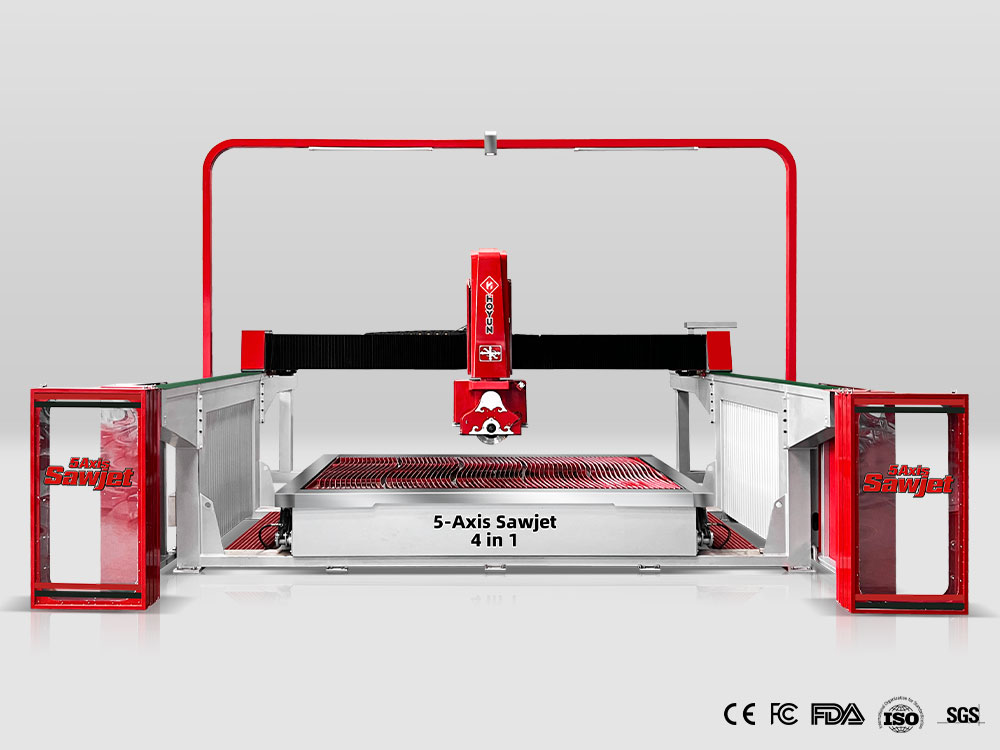
A Sawjet is an integrated sintered-stone / stone fabrication machine. It combines 5-axis bridge-saw cutting, 5-axis waterjet cutting, 3-axis-class edging / finishing, and milling for sink holes and carved patterns on one machine.
One cell can cover common process steps, for example:
- Slab breakdown and straight or shaped cutting
- Waterjet openings for sink holes and complex contours
- Milled sink holes and carved patterns
- Edging, trimming, and related finishing
In short: multi-process on one machine, concentrated workflow, relatively smaller footprint. It suits shops that want fewer stations to cover more process steps.
What is a multi-machine line?
A multi-machine line is dedicated machines, split processes: each machine owns one process family; machines and operators together complete the full production path.
A common lineup:
| Machine | Main role |
|---|---|
| 5-axis bridge saw | Slab breakdown, straight cuts, shaped cutting |
| 5축 워터젯 | High-precision openings (sink holes, complex contours) |
| 3-axis machining center (stone router / finishing) | Edging, radii, trimming, milled sink holes, carving |
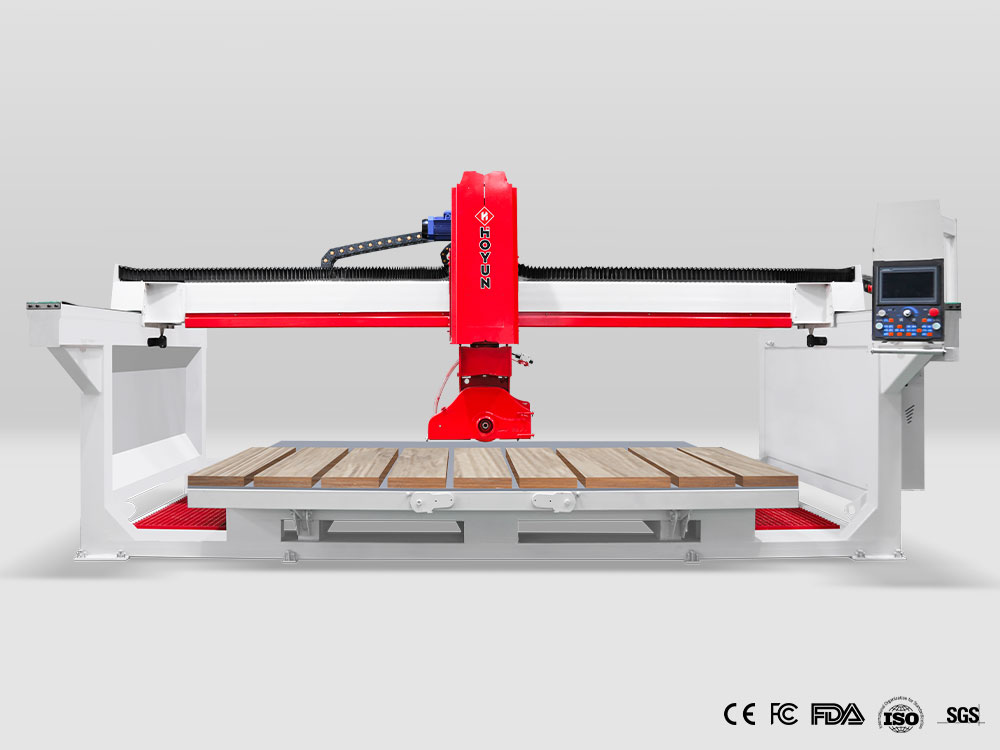
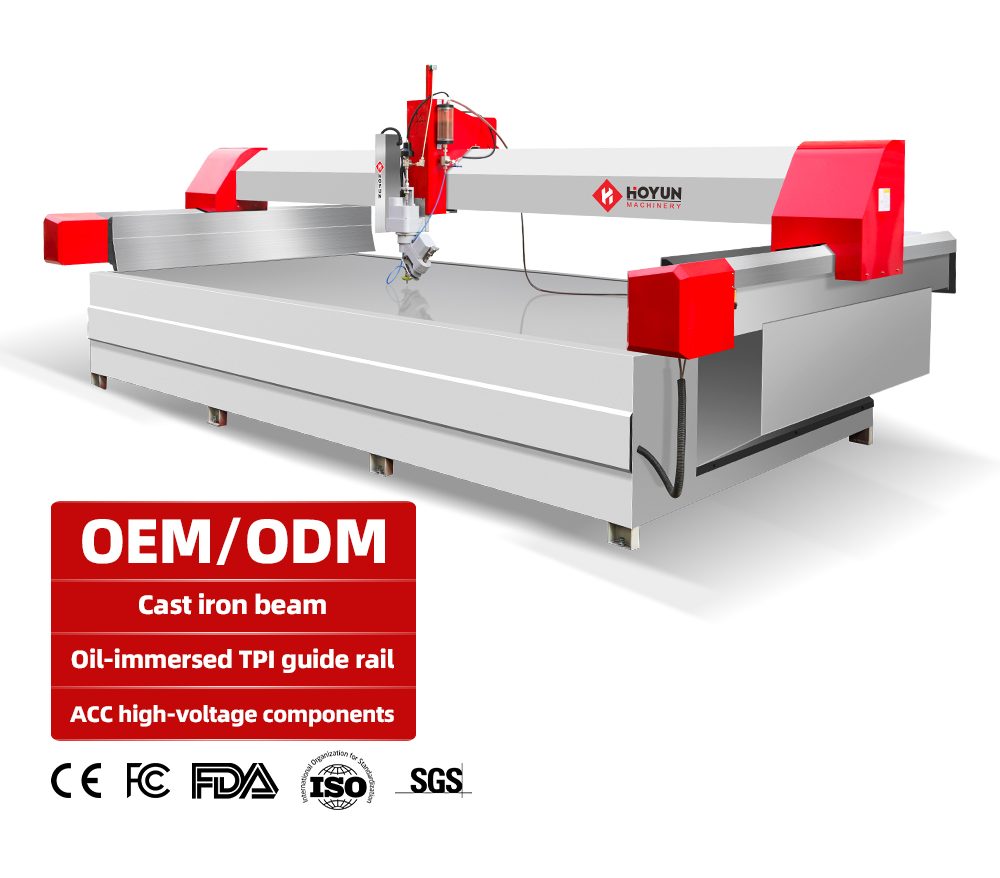
This path emphasizes parallel processing and takt matching: different steps can run on different machines at the same time, which fits standardized, higher-volume order books.
2. Three Selection Dimensions: Space / Orders / Labor
Do not start with “which machine is more advanced.” Start with: Will it fit my hall? How do orders land? Can I staff it?
2.1 Factory space
Lean toward a Sawjet when:
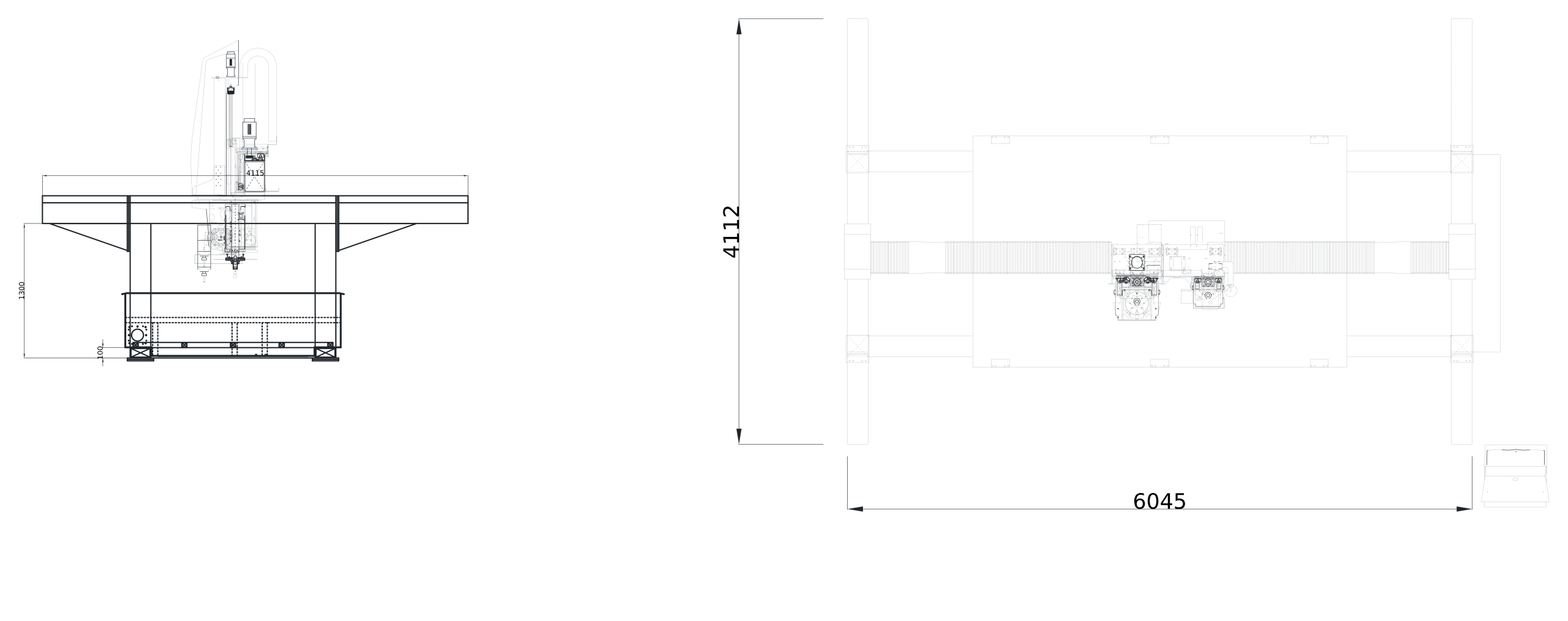
- Floor area is limited; you cannot comfortably place a bridge saw, waterjet, and machining center together
- You need cutting, openings, edging, and carving capability without shrinking logistics aisles or finished-goods staging
- You want fewer slab transfers and less intermediate stacking between machines
Lean toward a multi-machine line when:
- Hall space is ample and you can plan a process flow with buffers
- You can site loading/unloading, dust extraction, and water recirculation systems properly
- You want reserved machine bays and aisles for later expansion
Short takeaway: Tight floor → prioritize a combined platform. Wide hall and a planned line → multi-machine is more comfortable.
2.2 Order mix
Lean toward a Sawjet when:
- Orders are multi-SKU, small-batch, and custom countertop heavy
- Specs, hole types, and edge profiles change often each day
- You do not need a long-running, full-load single-process line
Lean toward a multi-machine line when:
- Repeat orders dominate and standardized products are a large share
- You want bridge saw, waterjet, and finishing running in parallel to shorten whole-order lead time
- Overall capacity targets clearly exceed what one combined cell can sustain at full load
Short takeaway: Fragmented, changeover-heavy orders → Sawjet is more flexible. Stable volume and high takt needs → parallel machines usually win.
2.3 Labor cost
Lean toward a Sawjet when:
- Local labor is expensive and you want fewer operators and supervisors
- You want to reduce the scheduling cost of many stations and many people watching machines
- Training one skilled operator can cover the main process set
Lean toward a multi-machine line when:
- Labor cost is manageable and you can staff multiple operators by station
- You have shift-team management for continuous line production
- You are willing to trade “people + dedicated machines” for higher parallel capacity
Short takeaway: Expensive, scarce labor → Sawjet uses fewer people. Ample staffing and capacity push → split stations fit better.
3. Comparison Snapshot
| 차원 | Sawjet (4-in-1) | Multi-machine line |
|---|---|---|
| Function coverage | Cutting, waterjet openings, milled sink holes / carving, edging on one platform | Bridge saw / waterjet / 3-axis center with clear process ownership |
| Floor space | Relatively smaller | Needs a larger hall and logistics aisles |
| Parallel capacity | Usually one process at a time on the cell | Multiple processes can run together; faster takt |
| Order fit | Multi-SKU, small batch, custom-heavy | High volume, standardized, repeat-heavy |
| 노동 | Fewer operators | Multiple operators by station |
| Expansion path | Start with one cell; add dedicated machines later | Plan as a line from day one; adding machines is more direct |
Note: This table is a selection-logic summary only. It does not include prices, ROI percentages, or competitor comparisons. Real throughput also depends on slab size, nesting / programming, and loading methods.
4. Decision: Look at Your Factory First
A Sawjet and a multi-machine line are not absolute winners or losers. Combine factory space, order mix, and labor cost:
- Small hall, expensive labor, fragmented orders → prioritize a Sawjet: multiple processes on one machine, saving space and people.
- Large hall, many repeat orders, enough operators → prioritize a multi-machine line: higher capacity and smoother process flow.
- Staged path (optional): start with a Sawjet for early orders; when the single cell becomes the bottleneck, add a dedicated bridge saw or waterjet and grow into a combined line. That protects early CapEx and keeps expansion flexibility.
Before you choose, list three things: usable area and aisles; order mix for the next 6–12 months (custom share vs batch share); and how many operators you can staff. When those three align, the path usually becomes clear.
Related reading: CNC Sawjet 4-in-1 overview · 5-axis bridge saw & waterjet buying guide.
5. FAQ
Can a Sawjet fully replace a multi-machine line?
In function, a Sawjet can cover cutting, openings, milled sink holes, carving, and edging. But it usually runs one process at a time. Under high-volume, multi-process parallel schedules, throughput is often lower than several machines running together. More accurately: function can substitute; capacity structure is not the same.
For a small sintered-stone shop just starting, which fits better?
If space and staffing are limited and orders are mostly custom tops, a Sawjet is usually the cleaner start: CapEx and management stay concentrated, and you gain a full process set sooner. If you already have stable high-volume orders and ample hall space at launch, plan a multi-machine line from the start.
What if orders grow later?
Start with a Sawjet; when the single cell is the bottleneck, add a dedicated 5-axis bridge saw or 5-axis waterjet to offload high-frequency steps and form a “combined cell + dedicated machines” line. That keeps early investment useful and leaves room to scale.
What information should you prepare before selecting?
Bring a floor plan or usable length/width; main materials (sintered stone / marble, etc.); typical tops and hole types; daily or monthly volume estimates; and current operator count and skills. The more complete the picture, the closer any equipment recommendation is to real production.
6. Call to Action
If you are planning sintered-stone or stone fabrication equipment and are unsure whether a Sawjet or a multi-machine line fits better, contact 호윤 기계. Share hall size, product types, and expected order volume—we will help you put capacity, floor space, and labor cost on one clear sheet.
Website: https://hoyunmachinery.com/
Sawjet: CNC Sawjet 5-axis product page · Bridge saw: CNC bridge saw category · Waterjet: AB 5-axis waterjet · 3-axis center: CNC stone router